



What's Happening?
General Motors (GM) is set to reintroduce plug-in hybrid vehicles (PHEVs) in North America starting in 2027. This strategic shift comes as demand for fully electric vehicles (EVs) has cooled, and petrol-electric hybrid models are rapidly gaining market
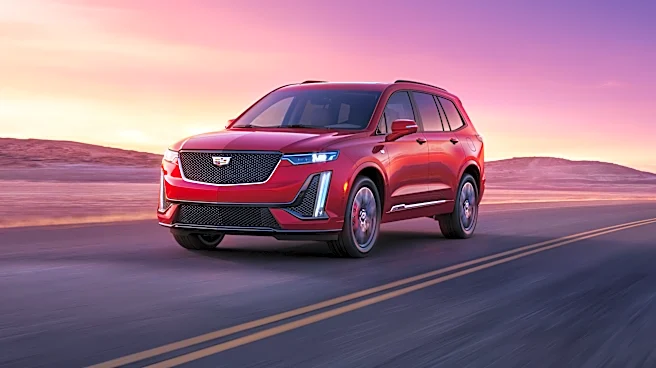
share in the U.S. GM had previously focused almost entirely on an all-electric lineup, with CEO Mary Barra describing hybrids as a temporary solution. However, the market's current trajectory, where hybrids accounted for approximately 19% of U.S. retail sales in August while EV sales declined by over 30% in the first nine months of the year, has prompted a more pragmatic approach from the automaker. While GM already possesses hybrid technology, utilized in Buick and Cadillac models sold in China, the U.S. versions will require specific development and production tailored to local market requirements. The company emphasizes that this move does not signify an abandonment of its electric vehicle plans, with models like the Chevrolet Equinox EV, Blazer EV, and Silverado EV, along with Cadillac's electric offerings, remaining in the lineup.
Why It's Important?
This strategic pivot by General Motors is significant for the U.S. automotive industry and consumers. It acknowledges a growing market segment that desires reduced fuel consumption without fully committing to the charging infrastructure and range considerations of pure EVs. For GM, which saw its U.S. market share decline to 16.8% in the first half of the year, this move is crucial to regain competitiveness against rivals like Toyota, Honda, and Ford, who have successfully capitalized on the hybrid market. The reintroduction of PHEVs, particularly for popular segments like pickup trucks and large SUVs, addresses a key consumer need where the weight and cost of large EV batteries can be prohibitive. This decision highlights the challenges and complexities of the transition to an all-electric future, indicating that a phased approach, incorporating hybrids, may be more viable for a significant portion of the U.S. market. It also suggests that other automakers might follow suit, adjusting their electrification strategies to meet evolving consumer preferences and market realities.
What's Next?
GM will now focus on developing and producing plug-in hybrid models specifically for the North American market, with their introduction slated for 2027. The company has yet to announce the specific models that will receive the PHEV treatment. This period will involve significant engineering and manufacturing adjustments to adapt existing hybrid technologies, currently used in China, to U.S. consumer demands and regulatory standards. Competitors, particularly those with established hybrid offerings, will likely continue to innovate and expand their lineups, intensifying the competition in this segment. Consumers can anticipate a broader range of hybrid options in the coming years, offering more choices for those seeking fuel efficiency and reduced emissions without fully transitioning to electric vehicles. GM's success in this renewed hybrid push will be closely watched as it navigates the evolving landscape of automotive electrification.
Beyond the Headlines
GM's decision to embrace plug-in hybrids reflects a broader recalibration within the automotive industry regarding the pace and pathway to electrification. It underscores the reality that consumer adoption of EVs is not uniform and is influenced by factors such as charging infrastructure availability, vehicle cost, and range anxiety. This shift could lead to a more diversified product portfolio across the industry, offering consumers a spectrum of choices from internal combustion engines to hybrids, plug-in hybrids, and full electric vehicles. Ethically, it raises questions about the environmental impact of continuing to produce vehicles that still rely on fossil fuels, even partially, versus a rapid, all-electric transition. However, from a practical standpoint, it allows for a more gradual reduction in overall emissions and provides a bridge for consumers who are not yet ready for a full EV commitment, potentially preventing a slowdown in emissions reduction efforts if EV adoption stalls. This pragmatic approach could ultimately accelerate the broader transition by making cleaner vehicle options accessible to a wider audience.