










What's Happening?
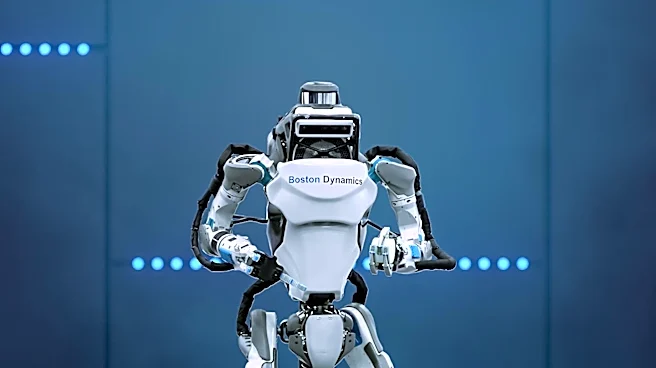
Hyundai's workers union in South Korea has initiated a partial strike, leading to the first factory shutdown in the auto industry over automation concerns. The strike comes after the union declared that the Atlas humanoid robot, developed by Boston Dynamics,
should not be introduced on production lines without employee consent. The union, representing approximately 40,000 workers, is negotiating with Hyundai over wages, job security, and the integration of humanoid robots in factories. The strike, which began at Hyundai's Ulsan production facilities, involves workers stopping work for four hours each day. The union is demanding stronger job protections, including transitioning production workers from hourly wages to fixed salaries, increasing the retirement age from 60 to 65, and ensuring job security as AI and robots are adopted. Hyundai has not specified when the Atlas robot will be deployed in South Korea, but plans to introduce it at its non-union Metaplant in Georgia by 2028.
Why It's Important?
The strike highlights the growing tension between labor unions and companies over the integration of automation and AI in the workplace. As industries increasingly adopt advanced technologies, concerns about job security and the future of work are becoming more pronounced. The outcome of these negotiations could set a precedent for how companies and unions address the challenges posed by automation. If Hyundai concedes to the union's demands, it may influence other companies to adopt similar safeguards, potentially slowing the pace of automation in industries reliant on manual labor. Conversely, if the company resists, it could lead to prolonged labor disputes and impact production and sales, as evidenced by the estimated reduction of 5,000 vehicles and a potential sales loss of over 200 billion won ($134 million).
What's Next?
Negotiations between Hyundai and the union are ongoing, with no agreement reached since discussions began in May. The union's demands for job security and changes in employment terms are central to the talks. If an agreement is not reached soon, the strike could escalate, further impacting Hyundai's production and financial performance. The situation is being closely watched by other industries facing similar challenges with automation, as the resolution could influence labor relations and automation strategies across sectors.