
What's Happening?
Inter Miami CF, the American professional soccer club, has received a $75 million preferred equity investment from Ares Management in August 2023. This investment follows an initial $150 million in September
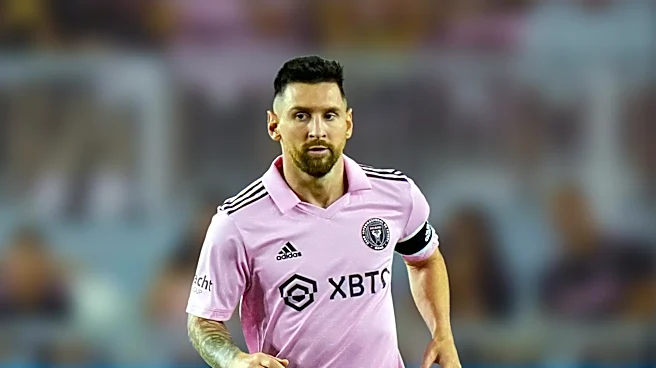
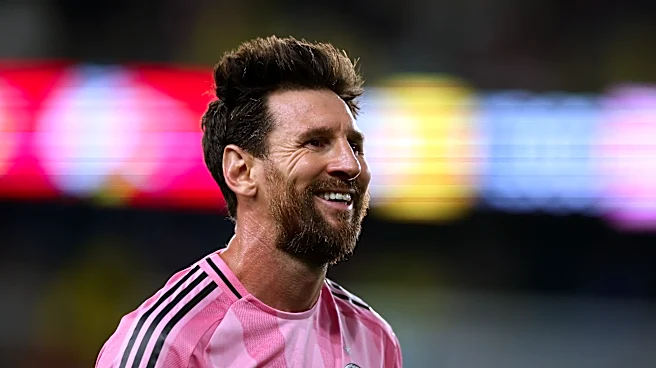
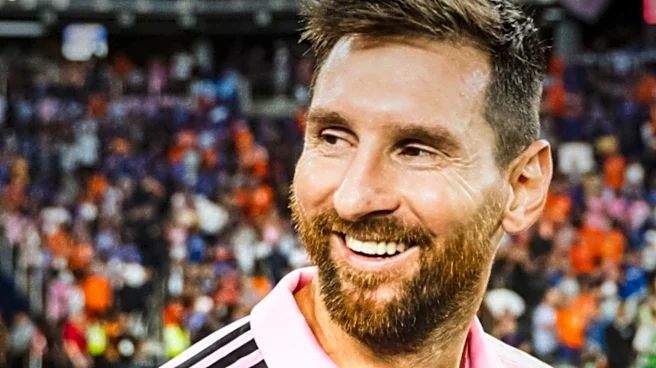
2021, bringing the total to $225 million. The funds are earmarked to support the development of the $1 billion Miami Freedom Park stadium and other growth initiatives for the club. Ares Management, through its credit group and a $3.7 billion sports-focused fund, views Inter Miami as a strategic investment. This financial boost coincides with the signing of Lionel Messi in 2023, whose contract is valued at $50-60 million annually through 2025 and includes a future equity stake. Managing owner Jorge Mas projected in July 2023 that the club's valuation could reach $1.5 billion within a year, a significant increase from Sportico's prior year estimate of $585 million. The club, established in 2018 with backing from David Beckham, began playing in 2020 and saw the Mas brothers take majority control in 2021.
Why It's Important?
This substantial investment from Ares Management underscores the growing financial viability and appeal of Major League Soccer (MLS) as a whole, and Inter Miami CF in particular. The influx of capital will directly facilitate the construction of the Miami Freedom Park stadium, a critical infrastructure project that will enhance the club's revenue streams through ticketing, concessions, and other event-related income. The valuation projections, significantly boosted by Lionel Messi's arrival, highlight the profound economic impact a global superstar can have on a U.S. sports franchise. This trend could encourage further high-profile international player acquisitions across MLS, elevating the league's global profile and attracting more foreign investment. For Ares Management, this represents a strategic bet on the burgeoning U.S. soccer market and the long-term growth potential of Inter Miami CF, positioning them to gain from the club's increasing valuation and profitability. The investment also signals confidence in the club's management and its ability to capitalize on Messi's presence to drive commercial success.
What's Next?
The immediate next step for Inter Miami CF will be the continued development and eventual completion of the Miami Freedom Park stadium, with the club expected to move to the 25,000-seat Nu Stadium at the development in April 2026. The club will also focus on maximizing the commercial and sporting opportunities presented by Lionel Messi's presence, including leveraging his global appeal for sponsorships, merchandise sales, and increased viewership. The financial backing from Ares Management, while not involving day-to-day management, will likely provide strategic advisory, potentially influencing future growth initiatives and financial planning. The club's projected valuation increase to $1.5 billion within a year, as estimated by Jorge Mas, will be a key metric to watch, indicating the success of their current strategies and investments. Further investments in player talent and infrastructure are also likely as the club aims to solidify its position as a top MLS franchise.
Beyond the Headlines
The investment in Inter Miami CF and the impact of Lionel Messi's arrival extend beyond immediate financial gains, signaling a broader shift in the landscape of U.S. professional soccer. Messi's presence has not only elevated Inter Miami's brand but has also significantly boosted the visibility and credibility of MLS on the international stage. This could lead to increased media rights deals, greater fan engagement, and a higher caliber of talent considering MLS as a viable career option. The development of the Miami Freedom Park stadium represents a trend towards purpose-built, state-of-the-art facilities that enhance the fan experience and provide long-term assets for clubs. Ethically, the substantial investment and high player salaries raise questions about equitable development across the league and the potential for a widening gap between financially robust clubs and those with fewer resources. Culturally, Messi's move has further integrated global soccer into the American sports consciousness, potentially fostering a new generation of soccer fans and influencing youth sports participation.