


What's Happening?
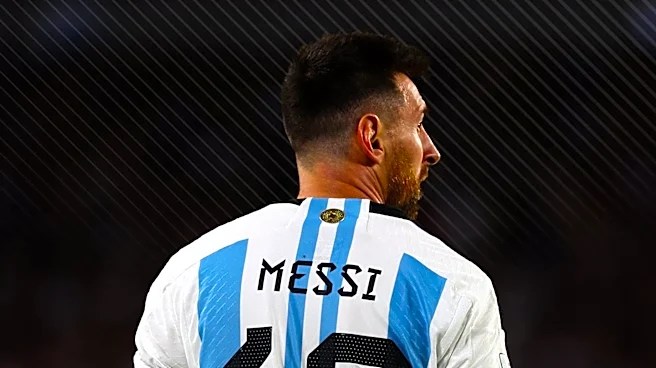
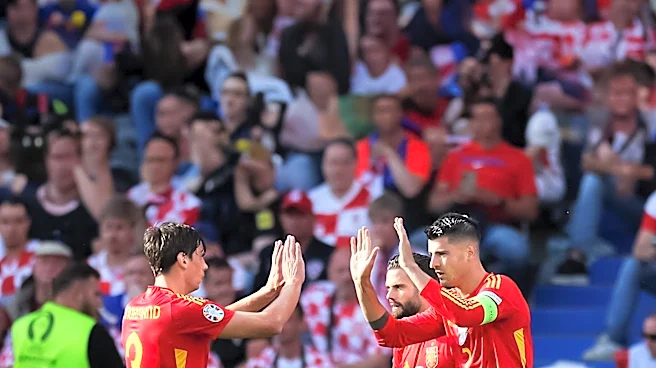
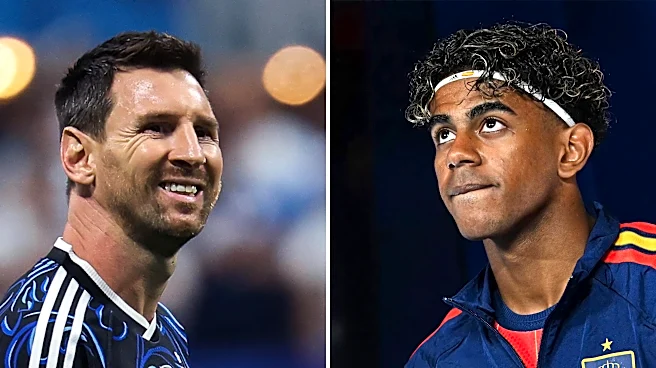
Lionel Messi, at 39 years old, played in his sixth World Cup, culminating in a final against Spain where Argentina lost 1-0. Despite his age, Messi remained a crucial player, contributing creatively to Argentina's efforts. However, his need to conserve
energy for attacking meant Argentina faced challenges defensively against Spain's possession-heavy play. The match saw Spain dominate possession and passing, with Argentina struggling to counter effectively. Messi's presence was vital for Argentina's late chances, but the team's overall strategy faced criticism, particularly regarding player selection and tactical decisions.
Why It's Important?
Messi's performance in the World Cup highlights the challenges of balancing experience and physical demands in high-stakes matches. His continued influence on the field underscores his status as one of soccer's greatest players, even as age impacts his defensive contributions. The match also reflects broader strategic considerations in soccer, where teams must adapt to the strengths and weaknesses of their star players. Argentina's loss raises questions about future team compositions and strategies, especially as Messi's career nears its end.
What's Next?
Argentina will need to reassess its approach to international competitions, considering the potential retirement of Messi from World Cup play. The team may focus on developing younger talent to fill the void left by Messi's eventual departure. Meanwhile, Spain's victory positions them as strong contenders for future tournaments, with a young squad poised to improve further. The outcome may influence other teams' strategies, emphasizing the importance of youth and adaptability in international soccer.