
What's Happening?
Kroger and Sam's Club are advancing their retail media networks (RMNs) by utilizing detailed shopper behavior data to offer brands more precise advertising opportunities. Retailers are moving beyond traditional
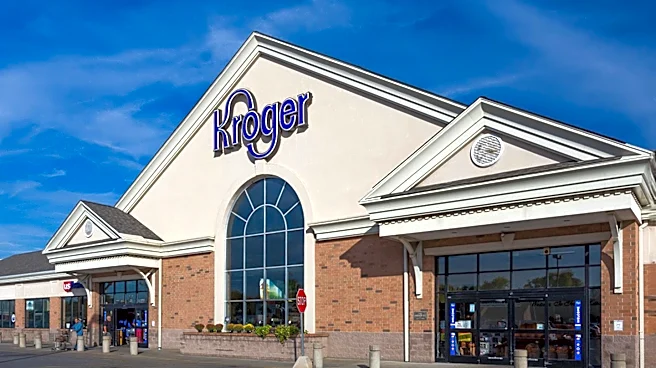
shelf space and promotions, focusing on data-driven strategies to enhance visibility and engagement. Kroger's RMNs provide access to diverse consumer segments across its regional banners, allowing brands to tailor advertising based on demographics like household income and family size. For instance, placer.ai data indicates significant differences between Ralphs and Food 4 Less shoppers, suggesting customized approaches. Kroger is exploring digital endcap screens to drive in-store product discovery and engagement, particularly in stores with shorter shopping trips. Sam's Club is expanding its ad inventory by installing digital screens at fuel pumps, leveraging the fact that fuel station traffic has outpaced overall store traffic growth. This strategy provides an additional touchpoint for brands to reach members, including new shoppers attracted by discounted gasoline.
Why It's Important?
This evolution in retail media is crucial for both retailers and brands in the competitive U.S. market. For retailers like Kroger and Sam's Club, RMNs create significant new revenue streams by monetizing their extensive shopper data and physical store footprints. This allows them to diversify income beyond traditional sales. For brands, these advanced RMNs offer unprecedented precision in targeting consumers at the point of purchase, leading to more effective advertising campaigns and potentially higher returns on investment. By understanding specific shopper behaviors and demographics, brands can optimize their messaging and product placement, reducing wasted ad spend. This shift also signifies a move towards a more personalized shopping experience, where promotions and product discovery are tailored to individual consumer preferences, potentially increasing customer satisfaction and loyalty. The integration of digital advertising in physical spaces, like fuel stations, expands the reach of retail media beyond the traditional in-store environment.
What's Next?
The trend of leveraging shopper data for targeted advertising is expected to intensify across the U.S. retail sector. Other major retailers will likely invest further in developing their RMN capabilities, seeking to emulate the successes of Kroger and Sam's Club. This could lead to more sophisticated data analytics tools, AI-driven personalization, and innovative advertising formats both in-store and across various customer touchpoints. Brands will increasingly demand more granular data and measurable ROI from their retail media investments, pushing retailers to refine their attribution models and reporting. We may also see increased competition among retailers to attract advertising dollars, potentially leading to new partnerships and collaborations within the retail media ecosystem. The expansion of digital advertising into non-traditional retail spaces, such as fuel stations and parking lots, is also likely to continue, creating new avenues for consumer engagement.
Beyond the Headlines
The maturation of retail media networks, driven by detailed shopper data, raises significant implications beyond immediate sales and revenue. It delves into the ethical considerations of data privacy and consumer surveillance, as retailers collect and utilize vast amounts of personal shopping information. The balance between personalized marketing and consumer privacy will become a critical discussion point, potentially leading to new regulations or industry standards. Furthermore, this shift could exacerbate the competitive landscape for smaller brands that may lack the resources to participate in sophisticated RMNs, potentially consolidating market power among larger players. Culturally, it signifies a further integration of advertising into everyday consumer experiences, blurring the lines between content and commerce. The long-term impact could be a retail environment where every interaction is a potential advertising opportunity, fundamentally reshaping how consumers discover and purchase products.