





What's Happening?
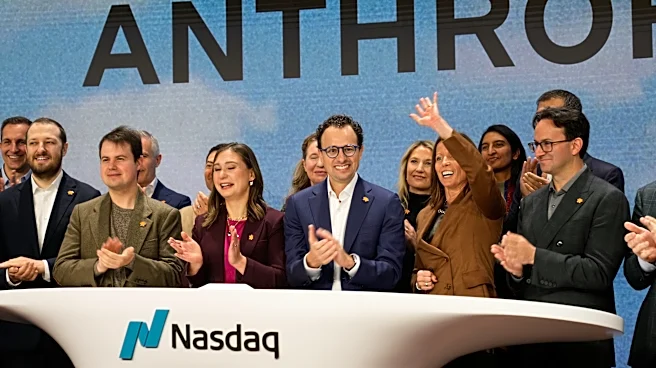
Lightspeed Venture Partners, along with other existing investors such as Altimeter Capital and Menlo Ventures, received more than half of the $81 billion in IPO shares for Anthropic. This allocation strategy was reportedly an effort by Anthropic to reward
its early backers. Typically, venture capital firms are not granted substantial IPO share allotments that can be immediately sold for gains, as they are usually restricted from selling their pre-existing holdings. The initial public offering of Anthropic experienced significant volatility, leading to a sharp decline in its market value. On its second day of trading, Anthropic lost approximately $109 billion of its market value. The stock dropped as much as 15% on Friday, briefly trading just 5 cents above its IPO price, before closing down 8.5% at $88.91. Despite these challenges, shares remained 7% above the IPO price. The turbulent debut has prompted a 'blame game' on Wall Street, with some investors pointing fingers at excluded fund managers, underwriters' shortcomings, and the broader climate for artificial intelligence stocks.
Why It's Important?
The significant allocation of Anthropic's IPO shares to existing venture capital firms like Lightspeed Venture Partners highlights a growing trend where early investors are prioritized in high-profile tech IPOs. This practice, while intended to reward initial supporters, can create market imbalances and fuel accusations of unfair access, particularly when a large percentage of other firms seeking shares receive none. The volatility experienced by Anthropic's stock post-IPO, despite efforts to stabilize it, underscores the inherent risks and speculative nature of investing in the rapidly evolving artificial intelligence sector. The 'blame game' emerging on Wall Street reflects broader concerns about IPO pricing mechanisms, allocation strategies, and the potential for market manipulation or undue influence by a select group of investors. This situation could lead to increased scrutiny from regulatory bodies regarding IPO processes and investor access, potentially influencing future public offerings in the tech industry. For the broader market, such volatility in a major AI company could temper investor enthusiasm for the sector, impacting funding and valuations for other AI startups.
What's Next?
The immediate future for Anthropic's stock includes the availability of another 300 million shares for trading on December 15, which could introduce further pressure on its stock price. The exhaustion of stabilizing mechanisms, such as the green-shoe option, means the company will have fewer tools to manage price fluctuations. The ongoing 'blame game' on Wall Street is likely to continue, potentially leading to internal reviews by investment banks and venture capital firms regarding their IPO strategies and client relations. Regulatory bodies may also take a closer look at the allocation practices and trading dynamics of high-profile IPOs, especially in the tech sector, to ensure fairness and transparency. This could result in new guidelines or stricter enforcement of existing rules for share distribution and lock-up periods. For Lightspeed Venture Partners and other early investors, the upcoming trading period will be crucial in determining the long-term value of their Anthropic holdings, and their strategies for future investments in AI companies may be influenced by this experience.
Beyond the Headlines
The Anthropic IPO saga, involving firms like Lightspeed Venture Partners, reveals deeper ethical and structural questions within the venture capital and public markets. The practice of heavily favoring existing investors in IPO allocations, while seemingly a reward for early support, can be seen as creating an 'insider' advantage that limits broader market participation and potentially inflates initial valuations. This raises questions about equitable access to high-growth investment opportunities and whether such practices contribute to wealth concentration. Furthermore, the rapid and significant market value plunge of Anthropic, despite its perceived success by those close to the company, highlights the disconnect between private market valuations and public market realities, especially in speculative sectors like AI. This could lead to a re-evaluation of valuation methodologies for pre-IPO companies and a more cautious approach from institutional investors. The incident also underscores the psychological impact of market volatility, where 'finger-pointing' often replaces objective analysis, potentially eroding trust in financial institutions and the IPO process itself. This could trigger a broader debate on investor protection and market integrity in the context of highly anticipated tech offerings.