



What's Happening?
The U.S. Department of Agriculture (USDA) is forecasting that agricultural production expenses will remain elevated through 2027, placing ongoing financial strain on U.S. farmers, particularly specialty crop growers. The USDA recently revised its production cost
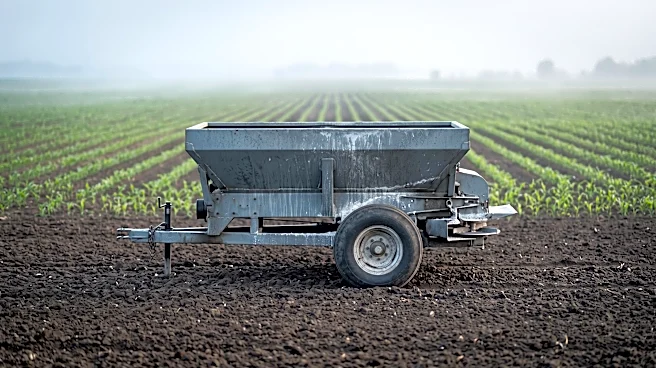
estimates upward for all major field crops in both 2026 and 2027, compared to projections released in June. While these estimates primarily focus on traditional field crops, specialty crop producers face similar challenges, including high costs for fertilizer, labor, equipment, and transportation. Fertilizer accounts for a significant portion of these increased projections, with forecasts rising approximately 10% for 2026 and 14% for 2027. Other projected increases between 2026 and 2027 include chemicals at 10%, land rent and repairs at about 4% each, seed at 3.9%, and labor at 2.7%. Although the USDA anticipates some relief in fuel and interest expenses in 2027, overall production costs are expected to stay high.
Why It's Important?
The persistent rise in farm production costs poses a significant threat to the profitability and sustainability of U.S. agriculture. High expenses for essential inputs like fertilizer, labor, and fuel directly impact farmers' operating margins, potentially leading to reduced investment in new technologies, delayed equipment upgrades, or even financial hardship. For specialty crop growers, these costs affect every stage of production, from crop establishment and pest management to harvesting, packing, and transportation. The continued financial pressure could translate into higher food prices for consumers, reduced domestic food production, and increased reliance on imports. This situation underscores the critical need for effective policy measures and support programs to help farmers manage these economic challenges and ensure the long-term viability of the nation's food supply. The American Farm Bureau Federation (AFBF) highlights this by calling for a modernized five-year farm bill and other initiatives to strengthen agricultural markets.
What's Next?
In response to these rising costs, the USDA has introduced the $8 billion Harvest Fuel Relief Program (HFRP) to provide financial assistance to agricultural producers facing high diesel costs. While program details, including payment rates and eligibility, are still being finalized, the USDA is encouraging specialty crop growers and other producers outside traditional Title I commodity programs to submit information about their increased fuel expenses. This input will be crucial in developing equitable payment rates. Concurrently, discussions around the Farm Bill continue, with the AFBF advocating for its modernization, authorization of year-round E15 fuel sales, and measures to strengthen agricultural markets. These ongoing efforts aim to provide both immediate relief and long-term stability for farmers as they navigate the challenging economic landscape projected through 2027.
Beyond the Headlines
The sustained increase in agricultural production costs reflects a complex interplay of global economic factors, supply chain disruptions, and inflationary pressures. This trend highlights the inherent volatility of farming, where external forces can significantly impact domestic food production and prices. The focus on fertilizer costs, in particular, points to the global energy market and geopolitical events that influence the availability and pricing of key agricultural inputs. Furthermore, the emphasis on labor costs underscores ongoing debates about immigration policy, workforce availability, and fair wages within the agricultural sector. This situation prompts a deeper examination of the resilience of U.S. food systems and the need for innovative solutions, such as precision agriculture and sustainable practices, to mitigate cost pressures and enhance efficiency in the face of evolving economic and environmental challenges.