







What's Happening?
Meta has announced a partnership with MacroCycle Technologies, a polymer manufacturing company, to address emissions from plastics in its supply chain. As part of this collaboration, Meta will purchase environmental attribute certificates (EACs) from MacroCycle.
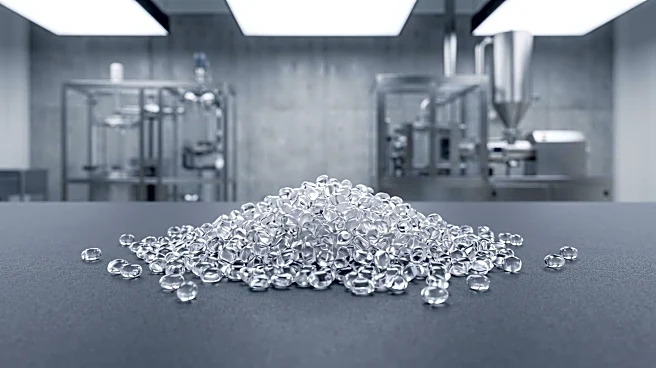
The funds from these certificates will be used to finance the construction of MacroCycle's first commercial plant in the Southwestern U.S. This new facility is projected to produce 5,000 tonnes (approximately 5,500 U.S. short tons) of third-party verified recycled PET polymer annually. MacroCycle, founded in 2023 out of MIT, has developed a proprietary process called SolvoGenesis. This process utilizes solvents to convert textile and packaging waste into virgin-quality PET, capable of handling mixed, blended, and contaminated materials more effectively than traditional mechanical recycling methods. The SolvoGenesis process also boasts an 80% reduction in energy consumption compared to conventional PET production.
Why It's Important?
This partnership is significant for several reasons. For Meta, it represents a concrete step towards achieving its goal of net-zero emissions by 2030, specifically by advancing lower-carbon solutions within its supply chain and material usage. For the U.S. plastics market, MacroCycle's new plant aims to bolster domestic recycled PET capacity, which is currently shrinking despite the U.S. importing over 40% of virgin PET and 20% of recycled PET. This initiative could contribute to a more resilient and domestic supply chain for recycled plastics. The SolvoGenesis technology offers a more sustainable and efficient method for recycling PET, addressing the limitations of mechanical recycling and the energy intensity of other chemical processes. This innovation could set a new standard for plastic recycling, making it possible to process a wider range of waste materials and reduce the environmental footprint of plastic production across various industries.
What's Next?
The immediate next step is the buildout of MacroCycle's first commercial plant in the Southwestern U.S., funded by Meta's purchase of environmental attribute certificates. Once operational, the plant will begin producing 5,000 tonnes of third-party verified recycled PET polymer annually. This will allow Meta to integrate more recycled content into its supply chain, moving closer to its net-zero emissions target. The success of this plant could pave the way for further expansion of MacroCycle's SolvoGenesis technology and potentially encourage other corporations to invest in similar advanced recycling solutions. This partnership may also influence policy discussions around domestic recycling infrastructure and the adoption of innovative recycling technologies to reduce reliance on imported virgin and recycled plastics. The broader plastics industry will likely monitor the performance and scalability of MacroCycle's process as a potential model for future sustainable practices.
Beyond the Headlines
This collaboration highlights a growing trend where major corporations are not just setting sustainability goals but actively investing in innovative technologies to achieve them. Meta's involvement in funding MacroCycle's plant demonstrates a shift from passive carbon offsetting to direct investment in circular economy solutions. The SolvoGenesis technology's ability to process mixed and contaminated waste streams is a critical advancement, addressing a major bottleneck in current recycling systems and potentially diverting vast amounts of plastic from landfills and incineration. This partnership also underscores the increasing importance of environmental attribute certificates as a financial mechanism to support green infrastructure development. Beyond the immediate environmental benefits, this initiative could foster job creation in the green technology sector and stimulate further research and development in advanced materials recycling, ultimately contributing to a more sustainable industrial landscape and reducing the overall carbon intensity of consumer goods.