






What's Happening?
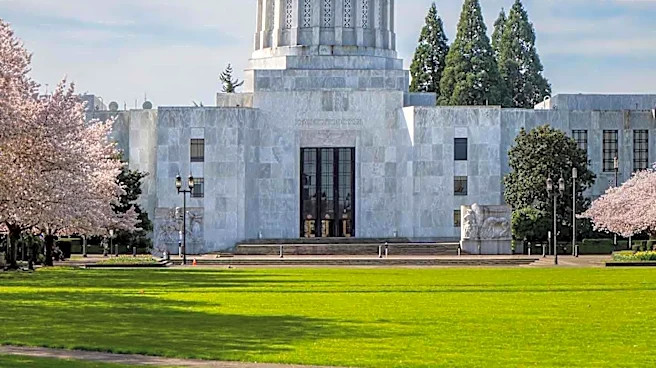
Oregon's Office of Economic Analysis released its latest quarterly report, indicating an additional $245 million will be available in the state's 2027-2029 biennium budget. This increase is primarily attributed to a national rise in economic activity,
with approximately $233 million stemming from the general fund. State Chief Economist Carl Riccadonna and Senior Economist Michael Kennedy highlighted that despite persistent inflation and significant energy price increases, consumers have demonstrated resilience in spending. Concurrently, rising corporate profits have spurred businesses to increase hiring and investment. While this economic strength is positive, it also contributes to ongoing inflationary pressures, making inflation more persistent. Oregon Governor Tina Kotek noted that the forecast provides the government with 'steady financial footing' ahead of her 2027-2029 budget recommendations, emphasizing the need to build momentum to support families and foster job growth.
Why It's Important?
The increased revenue forecast for Oregon signals a robust economic environment, reflecting national trends of consumer resilience and corporate growth despite inflationary challenges. This financial stability could enable the state to make strategic investments in areas like education, as indicated by the potential for a $71 million corporate 'kicker' for the next biennium. However, the report also projects a nearly 13% drop in K-12 school enrollment over the next decade, raising concerns among lawmakers like House Republican Leader Lucetta Elmer about the future of Oregon's education system and potential school closures. The interplay between economic growth, inflation, and demographic shifts presents a complex challenge for policymakers, who must balance immediate financial opportunities with long-term societal needs and potential fiscal strains.
What's Next?
With less than eight months remaining in the state's current biennium, Oregon Governor Tina Kotek is expected to release her 2027-2029 budget recommendations, which will likely incorporate the findings of this latest economic forecast. The state will need to decide how to allocate the additional $245 million, with potential investments in education through a corporate 'kicker' being a key consideration. Lawmakers will also need to address the projected decline in K-12 school enrollment, which could necessitate policy adjustments to support educational institutions and ensure equitable resource distribution. Discussions will likely focus on balancing economic growth initiatives with social programs and infrastructure development, all while managing persistent inflationary pressures and preparing for future demographic shifts.
Beyond the Headlines
The Oregon revenue forecast highlights a broader national economic narrative where consumer spending and corporate profits continue to drive growth, even in the face of inflation. This resilience suggests a fundamental strength in the U.S. economy, but also underscores the challenge of managing inflation without stifling economic activity. The projected decline in K-12 enrollment in Oregon points to demographic shifts that could have significant long-term implications for public services, local economies, and the state's workforce pipeline. This trend is not unique to Oregon and could signal a wider need for states to re-evaluate their educational infrastructure and funding models to adapt to changing population dynamics, potentially leading to innovative approaches in education delivery and resource allocation.