









What's Happening?
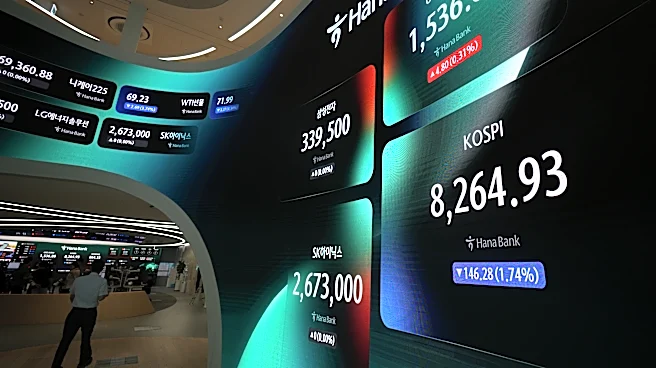
Shares in semiconductor and memory chip manufacturers have surged significantly in the first half of 2026, driven by the booming demand for hardware supporting artificial intelligence (AI) technologies. This surge has been particularly beneficial for companies
like Samsung and SK Hynix, whose shares have seen substantial increases. U.S. companies such as Sandisk, Western Digital, Micron, and Seagate have also experienced remarkable gains, with Sandisk's shares increasing by 780% this year. The demand for memory chips has led to higher prices, which in turn has driven up the profits and share values of these companies. This trend has been at the expense of some large software companies, which have seen a decline in investor interest. The rise in chip prices has also affected consumer electronics, with companies like Apple increasing the prices of products such as iPads and MacBooks.
Why It's Important?
The surge in chipmaker shares highlights the shifting dynamics within the tech industry, where hardware is gaining prominence over software due to the AI boom. This shift has significant implications for the U.S. tech market, as it underscores the growing importance of semiconductor manufacturing in the global economy. The increased demand for memory chips is driving up prices, impacting consumer electronics and potentially leading to higher costs for end-users. Additionally, the reliance on hardware for AI advancements could lead to increased investment in semiconductor manufacturing and innovation, further solidifying the U.S.'s position in the global tech landscape. However, the volatility in share prices also suggests potential risks, as market corrections could occur if demand stabilizes or supply constraints ease.
What's Next?
As the demand for AI-related hardware continues to grow, chipmakers are likely to expand their production capacities to meet the increasing needs. This could involve significant investments in new manufacturing facilities and technologies. Companies may also seek to diversify their supply chains to mitigate risks associated with geopolitical tensions and supply chain disruptions. Additionally, regulatory scrutiny may increase as governments seek to ensure fair competition and address national security concerns related to semiconductor manufacturing. Investors and industry stakeholders will be closely monitoring these developments to assess the long-term sustainability of the current growth trends in the semiconductor sector.