






What's Happening?
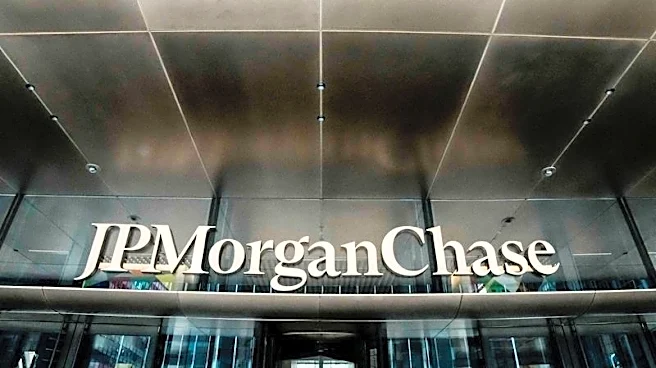
JPMorgan Chase, led by CEO Jamie Dimon, has announced a $24 million investment aimed at revitalizing the American maritime industry, particularly at the historic Philadelphia Navy Yard. This initiative is part of the bank's broader $1.5 trillion Security
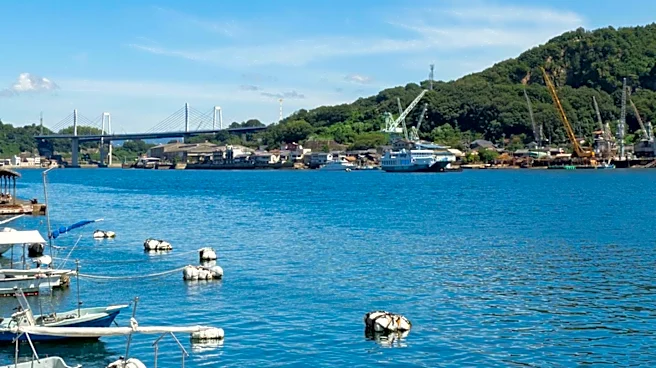
and Resiliency Initiative, which targets sectors critical to U.S. economic and military readiness. The funding includes $18 million in loans and investments, along with $6 million in philanthropic grants. A significant portion of this investment will finance a new submarine manufacturing and assembly facility operated by Rhoads Industries, expected to create 450 permanent jobs. Additionally, the capital will expand credit access for up to 100 local maritime small businesses and fund workforce training for welders and electricians. This move is seen as a response to the declining domestic maritime capabilities and a severe labor shortage in the sector.
Why It's Important?
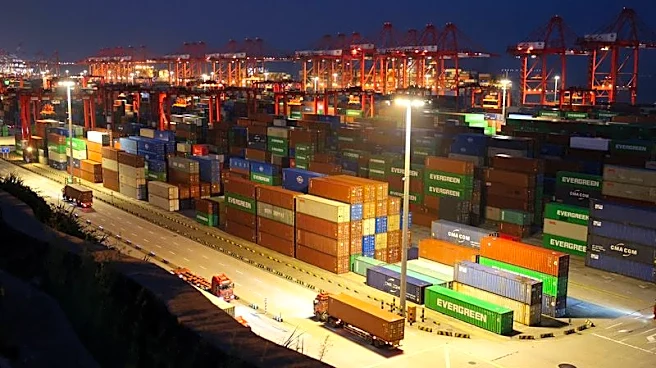
The investment by JPMorgan Chase is crucial as it addresses the significant decline in the U.S. maritime manufacturing sector, which currently produces less than 1% of the world's new commercial ships. The U.S.-flagged merchant fleet has drastically reduced from about 3,000 vessels in the 1960s to fewer than 190 today. This initiative not only aims to boost the domestic shipbuilding industry but also to enhance national defense capabilities by ensuring a robust supply chain and skilled workforce. The creation of 450 permanent jobs and the support for small businesses are expected to stimulate economic growth in the region. Moreover, this investment aligns with global efforts to rearm and secure supply chains amid geopolitical tensions, particularly in light of ongoing conflicts in Ukraine and the Middle East.
What's Next?
The initiative is expected to foster an ecosystem that supports the projected growth of the Philadelphia Navy Yard. With international partnerships, such as the South Korean Hanwha Group's acquisition of the Philly Shipyard, there are plans for significant upgrades to increase the shipyard's output. These developments could lead to the production of up to 20 vessels annually, including liquefied natural gas carriers and naval modules. The focus on skills training and secure supply chains is intended to ensure the sustainability of this growth. As the U.S. Navy anticipates needing 250,000 new skilled shipbuilding workers over the next decade, this initiative could play a pivotal role in meeting that demand.