






What's Happening?
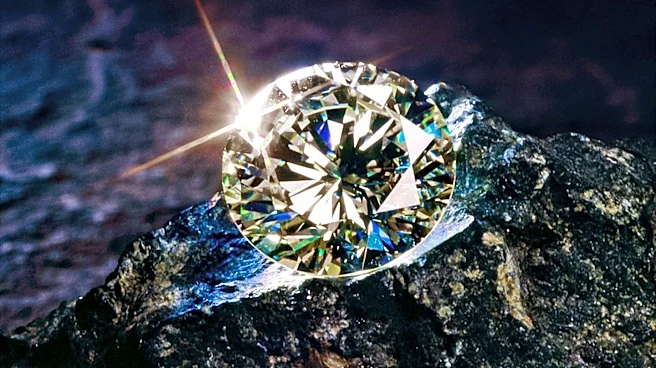
The Office of Foreign Assets Control (OFAC) has renewed General License 104B, permitting the continued import of certain Russian diamonds into the United States. This license specifically covers diamonds that were physically outside of Russia before the G7
import ban took effect. According to Jewelers Vigilance Committee President, CEO, and General Counsel Sara Yood, the renewed license authorizes trade in 1-carat or larger diamonds of Russian or unknown origin that were out of Russia by March 1, 2024. Additionally, diamonds between 0.5 and 0.99 carats from Russia or of unknown origin are covered if they were outside the country by September 1, 2024. General License 104B is valid until September 1, 2027, and replaces General License 104A, which was set to expire. This renewal is a result of sustained advocacy by the U.S. jewelry industry, which successfully lobbied to 'grandfather' these goods into the market.
Why It's Important?
This license renewal is crucial for the U.S. jewelry industry, as it provides clarity and legal authorization for the trade of a significant volume of diamonds that were already in circulation prior to the G7 sanctions. Without this license, businesses holding these 'grandfathered' Russian diamonds would face substantial financial losses and legal complications. The industry's successful lobbying efforts highlight its economic influence and its ability to navigate complex international sanctions. The continued allowance of these specific imports helps maintain stability within the diamond supply chain, preventing a sudden disruption that could impact jewelers, retailers, and consumers. It also underscores the ongoing challenge of tracing diamond origins, a practice that was not as rigorously enforced before the 2022 sanctions, and which now plays a critical role in compliance and market positioning against lab-grown alternatives.
What's Next?
The U.S. jewelry industry will continue to operate under the provisions of General License 104B until its expiration on September 1, 2027. Companies are strongly advised by Sara Yood to maintain meticulous source documentation for all their goods to ensure compliance and transparency. The renewal also serves as a reminder that the broader U.S. government sanctions against Russia remain in effect, meaning the import of Russian diamonds mined after the ban dates is still prohibited. The industry will likely continue its advocacy efforts regarding future diamond trade policies, especially as the September 2027 expiration date approaches. Furthermore, the emphasis on diamond origin and traceability is expected to intensify, influencing marketing strategies and consumer preferences in the coming years, particularly in the competition between natural and lab-grown diamonds.
Beyond the Headlines
The renewal of this license reveals a deeper tension between geopolitical sanctions and the practical realities of global supply chains. While the G7 sanctions aim to exert economic pressure on Russia, the 'grandfathering' clause acknowledges the pre-existing inventory and the economic impact on industries that rely on these goods. This situation highlights the complexities of implementing broad sanctions without causing undue harm to allied economies. It also brings to the forefront the ethical and logistical challenges of diamond traceability, pushing the industry towards more robust systems for verifying origin. The ongoing debate about natural versus lab-grown diamonds is further complicated by these sanctions, as origin becomes a key differentiator and a marketing tool, potentially reshaping consumer perceptions and market dynamics in the long term.