


What's Happening?
Brooks Brothers, under the new ownership of Authentic Brands Group and the leadership of Creative Director Michael Bastian and CEO Ken Ohashi, is undergoing a significant turnaround aimed at achieving a billion-dollar valuation. Following its 2020 bankruptcy,
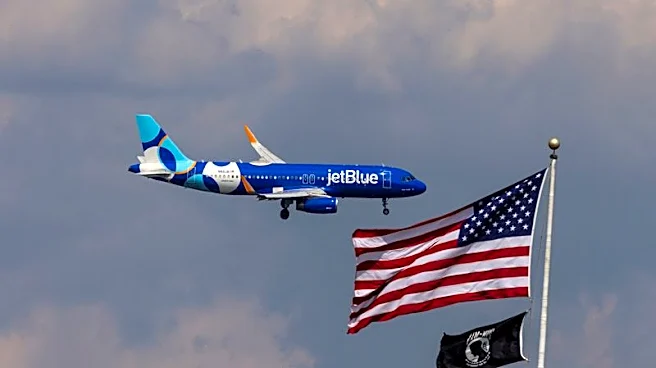
the brand has recorded five consecutive years of positive revenue growth. A key strategy involves revitalizing classic pieces, such as the Oxford cloth button-down, which Bastian noted was underrepresented in previous collections. The brand is also actively working to attract younger consumers through modern marketing efforts, including its first New York Fashion Week show in years, collaborations with streetwear brands like Needles and New Era, and campaigns featuring younger talent. These initiatives are designed to bridge an 'awareness gap' among consumers under 40, who Bastian identifies as a crucial demographic for future growth. Additionally, Brooks Brothers has diversified its business by launching a uniform division, providing attire for over 66,000 United Airlines employees, and establishing a limited partnership with Macy's to offer more accessible suiting options in select stores.
Why It's Important?
This strategic revitalization of Brooks Brothers is important for the U.S. retail and fashion industry as it demonstrates a pathway for heritage brands to adapt and thrive in a rapidly evolving market. The brand's focus on appealing to younger demographics while maintaining its classic identity could set a precedent for other established American labels facing similar challenges. The move to diversify revenue streams through ventures like the uniform business with United Airlines highlights a pragmatic approach to stability and growth beyond traditional retail. Furthermore, the careful and measured partnership with Macy's indicates a strategy to expand market reach without diluting brand prestige, a common dilemma for luxury and premium brands. If successful, Brooks Brothers' journey could serve as a case study for balancing tradition with modernity, and exclusivity with accessibility, ultimately influencing how other legacy brands approach their own turnarounds and market positioning in the competitive U.S. retail landscape.
What's Next?
Brooks Brothers aims to consistently achieve a billion dollars in annual revenue, with ongoing efforts focused on high-level marketing plays to raise brand awareness. The brand plans to continue investing in its physical retail presence, with CEO Ken Ohashi mentioning the opening of 10 new stores within the year, including a New York flagship. Creative Director Michael Bastian believes that sustained growth is achievable by continuing the current strategies, particularly those aimed at engaging younger audiences. The brand will likely further explore collaborations and innovative marketing tactics to maintain momentum and attract new customers. The success of its uniform business and the Macy's partnership will also be closely monitored as potential models for future diversification and market penetration. The brand's ability to balance its historical identity with contemporary trends will be crucial in its continued pursuit of market relevance and financial targets.
Beyond the Headlines
The Brooks Brothers turnaround reflects a broader trend in the U.S. fashion industry where heritage brands are grappling with the need to remain relevant in a fast-paced, youth-driven market. The brand's strategy of reintroducing iconic pieces while simultaneously embracing modern influences and marketing techniques highlights a cultural shift in consumer expectations. It underscores the challenge of preserving brand legacy while adapting to new aesthetic preferences and purchasing behaviors, particularly among Gen Z and millennial consumers. The emphasis on 'brand-enhancing investments' and 'top-of-funnel marketing' suggests a recognition that traditional advertising alone is insufficient to capture the attention of today's diverse consumer base. This evolution also touches upon the ethical considerations of brand authenticity versus commercial viability, as Brooks Brothers navigates collaborations and partnerships that might initially seem divergent from its traditional image. The long-term success of this strategy could redefine what it means for an American heritage brand to thrive in the 21st century.