


What's Happening?
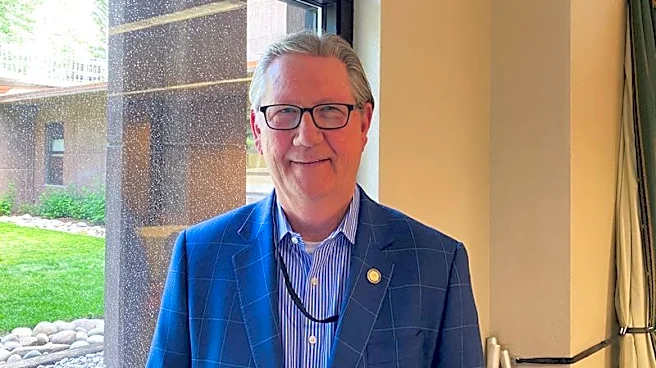
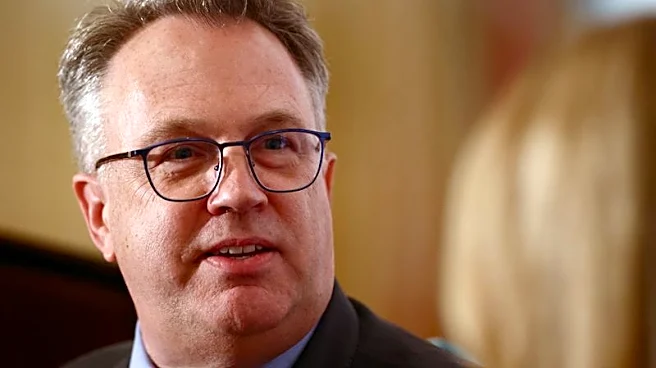
Kansas City Federal Reserve President Jeff Schmid has expressed the need for higher interest rates to address the current high inflation levels. In a recent speech in Omaha, Nebraska, Schmid stated that the existing monetary policy is not sufficiently
restrictive to bring inflation down to the Federal Reserve's target of 2%. He highlighted that despite a recent deceleration in inflation, it would be premature to rely heavily on a single data point. Schmid pointed out that the Personal Consumption Expenditures (PCE) index, which excludes food and energy prices, showed a slight decrease from 3.4% in May to 3.3% in June. However, he noted that the overall inflation rate remains elevated, partly due to volatile oil prices. Schmid emphasized that inflation is not solely driven by energy prices but also by strong demand, which can exacerbate the effects of supply shocks.
Why It's Important?
The call for higher interest rates by a Federal Reserve official underscores the ongoing challenges in managing inflation within the U.S. economy. Schmid's remarks highlight the complexity of balancing monetary policy to control inflation without stifling economic growth. The potential increase in interest rates could have significant implications for various sectors, including housing, consumer spending, and business investments. Higher rates typically lead to increased borrowing costs, which can slow down economic activity. However, they are also a tool to curb inflation by reducing demand. The Federal Reserve's approach to interest rates will be closely watched by investors, businesses, and policymakers, as it will influence economic stability and growth prospects.
What's Next?
While Schmid is not a voting member of the Federal Open Market Committee until 2028, his views contribute to the broader discussion on monetary policy. The Federal Reserve is expected to continue monitoring inflation trends and economic indicators to determine the appropriate course of action. The next Federal Open Market Committee meeting, scheduled for September, will be crucial in assessing whether a rate hike is warranted. Market participants will be looking for signals from the Fed regarding its future policy direction. Additionally, the ongoing volatility in oil prices and other external factors will play a role in shaping the Fed's decisions.