





What's Happening?
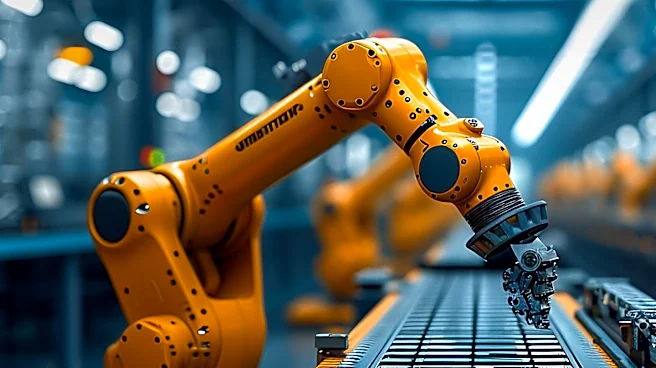
Procter & Gamble (P&G) plans to reduce its product-supply workforce, including contractors, by 20% to 30% by 2030. This reduction is a direct result of the company's strategy to replace labor-intensive manufacturing and supply chain operations with advanced
automation. Chief Product Supply Officer Luc Reynaert announced this initiative during the company's Investor Day presentation in Cincinnati on November 19. P&G currently operates autonomous production at over 15 sites and intends to expand this significantly in the fiscal year ending June 30, 2027. The company aims for up to 20% productivity improvement by 2030 through the integration of robotics, automation, and digitization, which will enhance safety, quality, and reliability in its operations. This move is part of P&G's broader 'Supply Chain 3.0' initiative, which began in 2023 and is now undergoing a company-wide rollout.
Why It's Important?
This strategic shift by P&G highlights a growing trend in major U.S. corporations towards increased automation in manufacturing and supply chain processes. The potential reduction of 20% to 30% of its product-supply workforce by 2030 signifies a substantial impact on employment within the sector, affecting both direct employees and contractors. While P&G frames this as a move to improve productivity, safety, and quality, it also raises concerns about job displacement and the need for workforce retraining. The company anticipates delivering up to $10 billion in productivity savings through fiscal 2030, including up to $1.8 billion annually in cost of goods sold. This focus on automation could set a precedent for other U.S. companies facing similar pressures to optimize operations and reduce costs, potentially accelerating the adoption of robotics and AI in industrial settings across the nation. The shift also underscores the evolving skill requirements for the future workforce, emphasizing digital fluency and technical expertise.
What's Next?
P&G plans to scale its unattended operations beyond the current 15-plus sites in the fiscal year ending June 30, 2027. The company will continue to integrate robotics, automation, and digitization across its supply chain, with a focus on achieving its 20% productivity improvement target by 2030. While P&G has not specified which plants or countries will experience the largest reductions, or the split between attrition and layoffs, the company's fiscal 2027 quarterly earnings calls will likely provide further updates on the progress of its Supply Chain 3.0 rollout. P&G also emphasizes its SPARK global manufacturing digital training program as a means to build digital fluency and new career paths for plant technicians, suggesting an internal effort to adapt its workforce to the changing operational landscape. The company's actions will be closely watched by industry analysts and labor organizations as a bellwether for automation's impact on the U.S. manufacturing workforce.
Beyond the Headlines
The move by P&G to significantly automate its product-supply operations carries deeper implications beyond immediate job reductions and productivity gains. Ethically, it raises questions about corporate responsibility in managing workforce transitions during technological shifts. While P&G highlights benefits like reducing undesirable night shifts and offering digital training, the scale of the projected job cuts necessitates a broader societal discussion on how to support workers impacted by automation. Legally, the implementation of advanced autonomous systems in warehouses and production lines brings new safety concerns, requiring adherence to standards like ISO 3691-4 and ISO 10218 for driverless industrial trucks and robot cells, and IEC 62443 for industrial cybersecurity. This shift also signifies a long-term cultural transformation within manufacturing, moving from human-centric oversight to highly precise, technology-driven processes, which could redefine the nature of industrial work and the skills valued in the future economy.