





What's Happening?
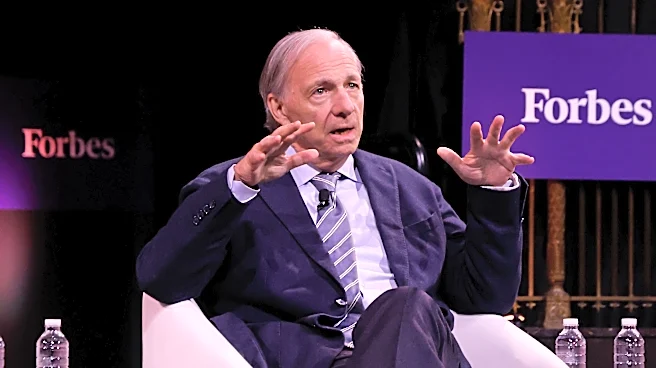
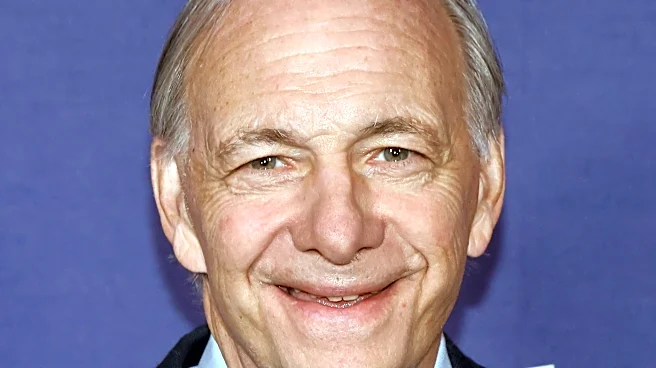
Ray Dalio, founder of Bridgewater Associates, a prominent asset management firm, is strongly recommending that investors allocate 10% to 15% of their portfolios to gold. Dalio emphasizes gold's irreplaceable role as an effective diversifier, asserting
its value regardless of the investment cycle. He highlights the importance of securing financial stability through safe, diversified investing, particularly in an environment where inflation can erode purchasing power. Dalio suggests that investors should account for an average inflation rate of about 3% and prepare for potential worst-case scenarios, such as a 50% drawdown. He also distinguishes gold from cryptocurrencies, noting that central banks prefer gold due to its secure, untraceable nature, unlike digital assets which can be monitored and potentially seized. This perspective comes as central banks and sovereign wealth funds are increasingly shifting away from Treasuries towards gold, a trend Dalio attributes to rising debt levels and geopolitical complexities.
Why It's Important?
Dalio's recommendation carries significant weight due to his stature as the founder of Bridgewater Associates, one of the world's largest hedge funds. His advocacy for a substantial gold allocation could influence investment strategies across the U.S. and global financial markets, potentially driving increased demand for gold. This shift reflects a broader concern about economic stability, inflation, and geopolitical risks, suggesting that traditional safe-haven assets are gaining renewed importance. For individual investors, adopting such a strategy could offer enhanced portfolio resilience against market volatility and inflationary pressures. For institutional investors and central banks, Dalio's insights reinforce the ongoing trend of diversifying reserves away from traditional fiat currencies and debt instruments, impacting global capital flows and the perceived stability of various asset classes. The distinction he draws between gold and cryptocurrencies also shapes the narrative around digital assets, potentially influencing regulatory approaches and investor confidence in the crypto market.
What's Next?
Following Dalio's public statements, it is plausible that more investors, both retail and institutional, will re-evaluate their portfolio allocations, potentially leading to an uptick in gold investments. This increased demand could further support gold prices, especially if economic uncertainties persist or escalate. Central banks and sovereign wealth funds are likely to continue their pivot towards gold, driven by concerns over national debt, inflation, and geopolitical tensions, as observed by Dalio. This trend could lead to a rebalancing of global financial reserves, with potential implications for the U.S. dollar's role as the primary reserve currency. Furthermore, the ongoing debate between gold and cryptocurrencies as safe-haven assets will likely intensify, prompting further discussions on their respective roles in a diversified portfolio and their regulatory treatment.
Beyond the Headlines
Dalio's emphasis on gold as an asset not dependent on a third party's promise touches upon a fundamental aspect of financial sovereignty and trust, particularly relevant in an era of increasing geopolitical fragmentation and economic uncertainty. His view that central banks prefer gold over cryptocurrencies due to privacy and control concerns highlights a deeper philosophical divide regarding the nature of money and value in the digital age. This perspective could influence long-term policy decisions regarding digital currencies and asset regulation, potentially favoring traditional, tangible assets in official reserves. The broader implication is a potential shift in the global financial architecture, where trust in government-issued debt and digital assets might diminish, leading to a resurgence of interest in assets with intrinsic value and historical resilience.