






What's Happening?
EnerVenue, a Fremont, California-based battery startup, has commenced mass production of its Aqueous Metal Cell batteries in Changzhou, eastern China. These batteries utilize nickel-hydrogen chemistry, similar to those that powered the Hubble Space Telescope
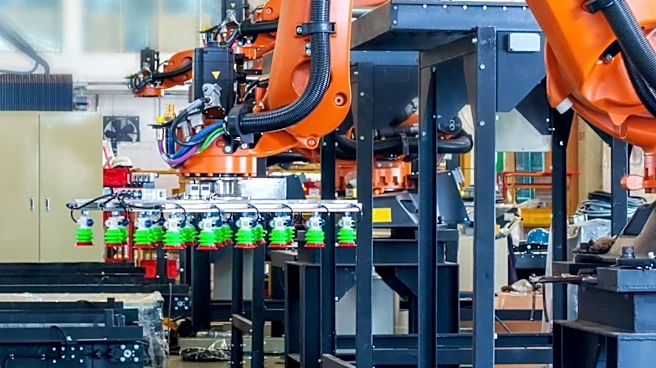
for 19 years. The company's first cell meeting specifications rolled out at the end of September. This move follows EnerVenue's decision to abandon plans for a large manufacturing plant in Shelby County, Kentucky, which was announced about a year prior and included a $264 million first phase and the creation of 450 jobs. According to EnerVenue CEO Henning Rath, the Kentucky plan was a 'valuable learning experience,' and the technology was not ready at that time. The new Chinese facility is significantly smaller than the proposed Kentucky plant, approximately 215,000 square feet compared to 1 million square feet, and is almost entirely automated, expected to employ around 400 people by year-end. Rath cited engineering skills and the depth of the supply chain in Changzhou as reasons for establishing the plant in China.
Why It's Important?
This development highlights a significant shift in manufacturing strategy for a U.S.-based clean energy company, moving production overseas despite initial plans for domestic job creation and investment. The decision to build in China, as reported by Reuters, was partly a condition for CEO Henning Rath taking the job, underscoring the global competition for manufacturing capabilities in emerging technologies. While the nickel-hydrogen battery chemistry offers advantages like long cycle life (30,000 cycles) and resistance to thermal runaway, its weight-to-energy ratio is less favorable compared to lithium-ion batteries, making it more suitable for stationary grid storage rather than electric vehicles. The U.S. had offered tax incentives for the Kentucky plant, and the shift raises questions about the effectiveness of such incentives in retaining advanced manufacturing within the country, especially given the 2025 tax law's limits on federal clean energy tax credits for products with Chinese content. This could impact the U.S.'s goal of strengthening its domestic supply chain for critical energy technologies.
What's Next?
EnerVenue aims to establish manufacturing plants in Europe, the Middle East, and North America starting in 2028, with site selections planned for next year. However, the feasibility of a U.S. plant is contingent on future legislation and regulations, particularly concerning clean energy tax credits and restrictions on Chinese content. The company's Changzhou line is designed to produce approximately 300 cells per day at full automation, with production expected to ramp up through November. The long-term performance of these batteries in real-world applications, beyond the less-than-a-year track record at a bus charging station in Jintan, will be crucial for widespread adoption. Additionally, the U.S. government and industry stakeholders will likely continue to evaluate policies to encourage domestic manufacturing of advanced battery technologies, potentially influencing EnerVenue's future decisions regarding U.S. production facilities.
Beyond the Headlines
The story of EnerVenue's manufacturing shift reflects broader challenges and complexities in the global clean energy transition. While the U.S. aims to foster domestic production and reduce reliance on foreign supply chains, particularly from China, the economic realities of manufacturing, including access to skilled labor, established supply chains, and cost efficiencies, often drive companies to international locations. This situation also brings to light the ethical considerations of intellectual property and technology transfer, as a U.S. company leverages a foreign manufacturing base for a technology with origins in U.S. space exploration. The long-term implications could include a continued reliance on foreign manufacturing for key components of the U.S. energy infrastructure, potentially impacting national security and economic resilience. It also underscores the need for comprehensive industrial policies that address not only financial incentives but also the development of a robust domestic ecosystem for advanced manufacturing.