




What's Happening?
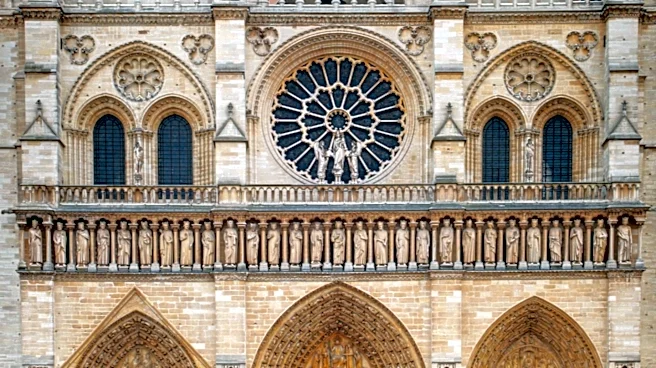
A new album titled 'Paris 1200 – École de Notre-Dame' by the Huelgas Ensemble, directed by Paul Van Nevel, has been released, focusing on music composed in Paris between approximately 1180 and 1290. This period is recognized for the emergence of early
polyphony, particularly from the Notre-Dame school, with notable composers like Léonin and Pérotin. The album features various forms of this early music, including organum, conductus, and motets. A key aspect of this recording is Van Nevel's use of specific vocal embellishments, such as plica, reverberatio, tremulando vox, vinnola vox, and longa florata, which he claims are being applied for the first time in modern recordings of this repertoire. These embellishments aim to recreate the performance practices of the 12th and 13th centuries, offering a fresh interpretation of these historical works.
Why It's Important?
This album is significant for musicologists, early music enthusiasts, and the broader cultural landscape in the U.S. and internationally, as it offers a novel and historically informed perspective on the origins of polyphonic music. The Notre-Dame school's innovations, such as rhythmic notation and the expansion of vocal parts, laid foundational groundwork for Western classical music. By incorporating previously unutilized vocal embellishments, the Huelgas Ensemble provides a potentially more authentic listening experience, challenging contemporary interpretations and enriching our understanding of medieval performance practices. This could influence future academic research, performance standards for early music ensembles, and public appreciation for this often-overlooked period of musical history, fostering a deeper connection to the roots of classical traditions.
What's Next?
The release of 'Paris 1200 – École de Notre-Dame' is likely to spark discussions and further research within the early music community regarding the authenticity and impact of these newly applied vocal embellishments. Other ensembles and scholars may analyze Van Nevel's interpretations, potentially leading to new performance practices or academic papers. The album's unique approach could also inspire a renewed interest in medieval music among a wider audience, potentially leading to more concerts, educational programs, and recordings dedicated to this period. For U.S. music institutions and festivals, this recording might serve as a benchmark or a source of inspiration for programming, encouraging a deeper exploration of historical performance techniques and the rich, complex soundscapes of early polyphony.
Beyond the Headlines
The album's exploration of early polyphony and its historical performance practices delves into the profound connection between music, culture, and societal evolution. The 'seismic revolution' in composition around 1200, as described by Van Nevel, reflects not just musical innovation but also shifts in intellectual and spiritual thought during the medieval period. The criticism faced by the new style, with figures like John of Salisbury calling it 'wanton and sensual,' highlights the ongoing tension between tradition and innovation in artistic expression. This historical context resonates with contemporary debates about artistic boundaries and the reception of new forms. The album, therefore, offers more than just music; it provides a sonic window into a pivotal era that shaped Western artistic sensibilities and continues to inform our understanding of musical development and its cultural implications.