
What's Happening?
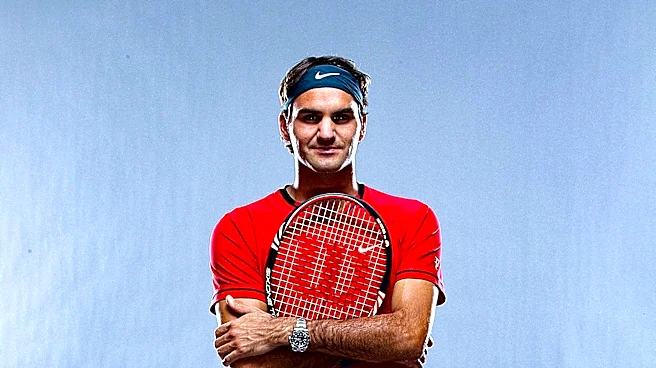
Roger Federer, recently inducted into the Tennis Hall of Fame in Newport, Rhode Island, has been criticized by tennis legend Billie Jean King for his perceived lack of involvement in advocating for gender equality within the sport. King, an 82-year-old
American icon known for founding the WTA and fighting for equal pay, expressed her disappointment in an interview with The Racquet magazine. She urged Federer to become more engaged, noting his role as a father to two sons and two daughters, suggesting that equality should resonate within his own family. King questioned whether Federer would ever take a stance that 'makes waves,' implying a preference for maintaining a comfortable public image over active advocacy.
Why It's Important?
Billie Jean King's critique of Roger Federer is significant because it comes from one of the most influential figures in sports history, particularly in the fight for gender equality. Her comments highlight the ongoing need for prominent male athletes to use their platforms to support broader social issues, even in sports where progress has been made. Federer's immense global popularity and respected status could significantly amplify calls for equality, making his perceived silence or inaction a missed opportunity in King's view. This discussion underscores the responsibility that comes with being a global sports icon and the expectation from some that such figures should be more than just athletes, but also agents of positive social change.
What's Next?
This public criticism from Billie Jean King could prompt Roger Federer to address the issue of gender equality in tennis more directly in future statements or actions. While Federer has not yet publicly responded to King's specific comments, the pressure from such a respected figure might influence his future philanthropic or advocacy efforts. The tennis world, including players, organizations, and fans, will likely observe how Federer chooses to engage with this critique. It could also spark broader conversations within the sport about the roles and responsibilities of male champions in promoting gender equity, potentially encouraging other male players to take more active stances on these issues.
Beyond the Headlines
Billie Jean King's remarks delve into the complex intersection of athletic legacy, social responsibility, and public image. Her challenge to Federer suggests that true greatness extends beyond on-court achievements to include off-court impact and advocacy for justice. The critique also implicitly questions the comfort that some male athletes might find in maintaining neutrality on controversial social issues, especially when they have the power to effect change. This situation highlights a generational difference in activism, with King representing a generation of athletes who actively fought for social progress, and her call to Federer serving as a reminder that the fight for equality is ongoing and requires continuous engagement from all influential figures, regardless of their personal comfort.