






What's Happening?
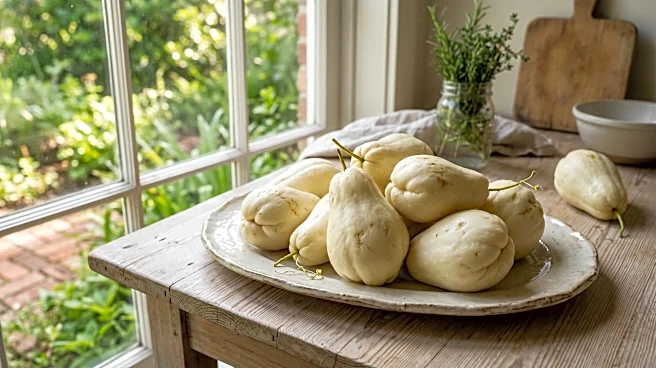
The White chayote squash, also known as Mirliton in the United States, was officially renamed the Ishreal Thibodeaux Mirliton in 2013. This renaming was done to honor Ishreal Thibodeaux, a Louisiana resident who dedicated many years to successfully cultivating
this rare variety. Thibodeaux was instrumental in revitalizing the growth of White chayote and other chayote varieties in New Orleans following the devastation caused by Hurricane Katrina. He also contributed significantly to the spread of its cultivation by offering his seeds for adoption. The White chayote is a perennial, tropical fruit, botanically classified as Sechium edule, and is considered a rare variety, possibly due to a recessive gene or mutation. It is characterized by its pear shape, firm, thin, smooth white-yellow skin, and a mild, sweet flavor similar to cucumber, turnip, and zucchini.
Why It's Important?
This renaming is significant as it highlights the importance of individual contributions to agricultural preservation and local food systems, particularly in the face of environmental challenges. Ishreal Thibodeaux's efforts to re-establish the White chayote after Hurricane Katrina demonstrate resilience and a commitment to cultural heritage, as the Mirliton has long been a staple in Louisiana home gardens and American cookery. The recognition of Thibodeaux through the renaming of the squash underscores the value of biodiversity and the role of local cultivators in maintaining unique plant varieties that might otherwise be lost. It also draws attention to the broader movement of preserving heirloom and rare produce, which contributes to food security and culinary diversity in the U.S. and beyond.
What's Next?
The Ishreal Thibodeaux Mirliton is expected to continue its presence in specialty grocers and farmers' markets in select regions of the United States, particularly in areas like Puerto Rico where it is already popular. The recognition may encourage further cultivation and appreciation of this rare squash, potentially leading to increased availability and culinary experimentation. Efforts to preserve and promote unique agricultural varieties, inspired by individuals like Thibodeaux, are likely to continue, fostering greater awareness of local food traditions and the importance of genetic diversity in crops. This could also inspire other communities to honor local agricultural heroes by naming produce after them, further embedding local history and culture into food systems.
Beyond the Headlines
Beyond its agricultural significance, the story of the Ishreal Thibodeaux Mirliton reflects a deeper narrative about community resilience and cultural identity. The Mirliton's role as a staple in Louisiana cuisine, and its near-disappearance after Hurricane Katrina, symbolizes the vulnerability of local traditions to natural disasters. Thibodeaux's dedication to its revival is not just about a plant; it's about restoring a piece of the community's heritage and ensuring its continuity. This act of preservation, recognized through renaming, transforms a simple vegetable into a symbol of endurance and the power of individual action to safeguard cultural practices. It also subtly critiques the commercial agricultural landscape, which often overlooks rare varieties in favor of mass-produced crops, emphasizing the need for grassroots efforts to maintain culinary diversity.