



What's Happening?
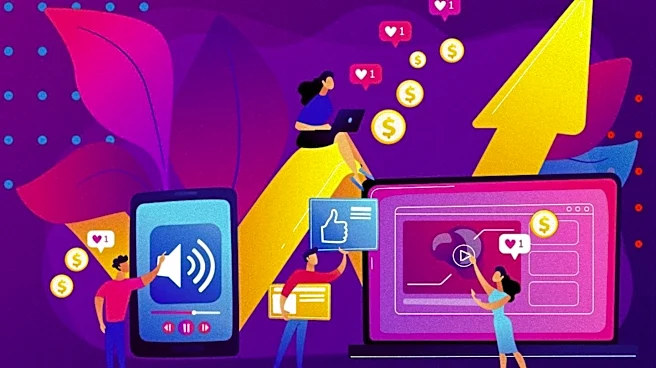
The influencer marketing sector in the U.S. is experiencing significant growth, with IAB data projecting U.S. creator advertising to reach $44 billion in 2026. This surge in spending is accompanied by a rising demand for specialist influencer marketing agencies,
with 49% of marketers now partnering with such agencies, an increase from 28% a year prior. Despite the increased investment, marketers face substantial challenges, particularly with measuring ROI (79% cite it as their biggest challenge) and attribution (48% identify it as the largest gap). The Influencer Marketing Hub's 2026 benchmark report indicates that 87.49% of marketing professionals expect their influencer budgets to rise, with 72.22% anticipating increases of 50% or more. This environment underscores the critical need for effective agency partnerships to navigate the complexities of creator selection, campaign execution, and performance measurement.
Why It's Important?
This trend is highly significant for the U.S. business landscape, as it highlights the evolving nature of advertising and consumer engagement. The substantial financial investment in creator advertising signals a permanent shift in marketing strategies, moving away from traditional channels towards more personalized and authentic influencer-led campaigns. For brands, selecting the right agency is paramount to ensuring that these rising budgets translate into tangible business outcomes. The challenges in ROI and attribution measurement indicate a need for greater transparency and more sophisticated analytical tools within the industry. Agencies that can demonstrate clear creative strategy, rigorous creator vetting, and robust measurement capabilities will be crucial for brands seeking to build trust and drive sales. Conversely, agencies that fail to address these pain points risk losing clients and market share in a competitive and rapidly expanding sector.
What's Next?
In the immediate future, brands will intensify their scrutiny of influencer marketing agencies, prioritizing those that offer clear creative strategies, transparent vetting processes for creators, and robust measurement frameworks. The industry will likely see a continued push for more sophisticated attribution models to address the current ROI challenges. Agencies will need to integrate their services more effectively across PR, paid media, and events to maximize campaign impact. Furthermore, the demand for agencies capable of managing diverse talent, from celebrities to micro-creators, will grow, requiring a nuanced approach to talent selection based on specific campaign goals. The 2026 data suggests that while in-house influencer marketing teams remain prevalent for smaller, steady programs, enterprise brands will increasingly rely on specialist agencies for large-scale, complex campaigns that require speed, specialized talent access, and multi-channel planning.
Beyond the Headlines
The rapid expansion of influencer marketing and the reliance on agencies also bring deeper implications for brand safety, ethical considerations, and the future of digital content creation. The emphasis on vetting creators beyond follower counts speaks to a growing concern about authenticity, fake engagement, and potential reputational risks for brands. This necessitates a more rigorous approach to due diligence, including examining audience quality, past brand work, and content style. Moreover, the integration of creator content into paid media (44% at enterprise brands) blurs the lines between organic and sponsored content, raising questions about disclosure and consumer transparency. As the industry matures, there will be an increased focus on regulatory compliance and ethical guidelines to maintain consumer trust. The shift also empowers creators, transforming them into significant economic actors and shaping new career paths within the digital economy.