
What's Happening?
Wabi-sabi is a Japanese philosophy that values imperfection, asymmetry, and the natural aging process of materials. It celebrates the unfinished and incomplete, finding beauty in character and change rather
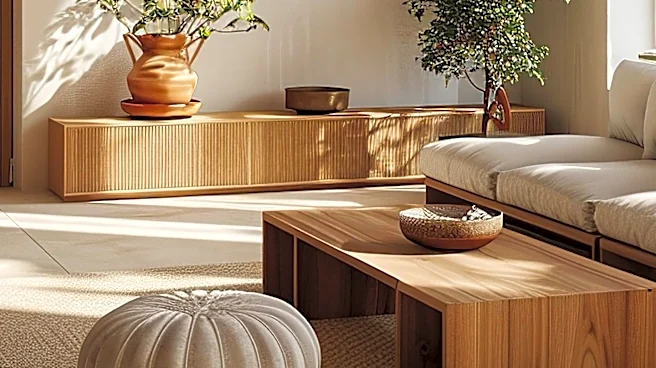
than in polish, symmetry, or newness. This aesthetic is deeply rooted in nature, often incorporating raw, untreated materials like oak wood. Unlike modern design trends that prioritize perfection, wabi-sabi suggests that true value lies in elements that have lived, changed, and remain unfinished. For instance, a cracked edge or an uneven stroke in art is not considered a mistake but an integral part of its beauty. The philosophy extends to various applications, including interior design, where elements like raw, untreated wood frames and natural stone walls are used to embody this serene style. It also influences artistic practices, such as creating ceramic vessels with intentional asymmetry and floral arrangements that embrace imbalance, as seen in Ikebana-inspired workshops.
Why It's Important?
The growing interest in wabi-sabi in the U.S. reflects a broader cultural shift towards appreciating authenticity and sustainability over manufactured perfection. This philosophy offers an alternative to consumer-driven trends that often promote constant upgrades and flawless aesthetics, potentially influencing American design, art, and lifestyle choices. For industries, it could lead to increased demand for natural, minimally processed materials and handcrafted goods, benefiting artisans and suppliers of raw materials. In interior design, it encourages the use of aged wood, natural stone, and textured finishes, moving away from sleek, mass-produced items. This shift can also impact mental well-being by fostering an acceptance of imperfections in daily life and surroundings, promoting a more grounded and less stressful approach to living. The emphasis on natural elements and the aging process also aligns with growing environmental consciousness, encouraging the reuse and appreciation of existing items rather than constant replacement.
What's Next?
The principles of wabi-sabi are likely to continue permeating various aspects of U.S. culture, from home decor to personal philosophy. We can expect to see more workshops and educational programs focusing on wabi-sabi art forms, such as ceramic and floral design, encouraging individuals to embrace imperfection in their creative endeavors. Businesses in the design and retail sectors may increasingly incorporate wabi-sabi elements into their product lines, offering items that highlight natural textures, asymmetry, and the beauty of wear. This could include furniture made from reclaimed wood, textiles with natural dyes and irregular weaves, and decor that celebrates handmade qualities. Furthermore, the philosophy's emphasis on finding beauty in the transient and incomplete may inspire a broader movement towards mindful consumption and a deeper connection with nature, influencing how Americans approach their living spaces and daily routines.
Beyond the Headlines
Beyond its aesthetic appeal, wabi-sabi offers profound ethical and psychological implications for American society. In a culture often driven by the pursuit of perfection and newness, wabi-sabi encourages a radical acceptance of transience and imperfection, challenging conventional notions of beauty and value. This can lead to a more sustainable lifestyle by promoting the appreciation of existing objects and materials, reducing waste, and fostering a deeper connection to the natural world. Psychologically, embracing wabi-sabi can alleviate the pressure to maintain flawless appearances, both in personal life and in material possessions, potentially reducing anxiety and promoting a more authentic sense of self. It encourages mindfulness and presence, inviting individuals to find beauty in the subtle, often overlooked details of everyday life. This philosophical shift could foster a greater sense of contentment and resilience in the face of life's inevitable changes and imperfections.