








What's Happening?
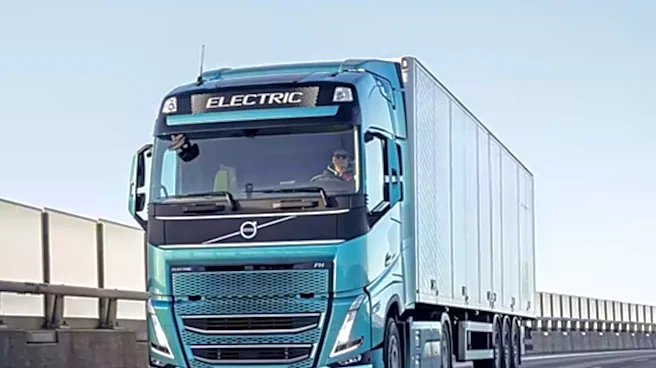
New Energy Transport (NET) has initiated its commercial electric heavy vehicle freight operations in Sydney by deploying its first Volvo heavy electric prime mover. Unilever has been announced as the foundation customer, marking a significant step in the company's
fleet expansion. The Volvo truck, part of a planned fleet of 11 electric trucks, will transport consumer goods from Unilever's distribution center in Ingleburn to various customer sites across Sydney. This initiative is supported by Volvo Financial Services and the Clean Energy Finance Corporation, aiming to reduce leasing costs for heavy electric trucks in Australia. NET's Rapid Deployment Plan, backed by a $5 million equity raise, seeks to deploy 20 electric trucks and six mobile charging units by the end of 2026. The partnership with Unilever and Volvo is seen as a major milestone in decarbonizing supply chains and enhancing freight efficiency.
Why It's Important?
The deployment of electric trucks by NET represents a significant advancement in reducing emissions within the freight industry. By partnering with Unilever, a major consumer goods company, NET is setting a precedent for other businesses to follow in decarbonizing their supply chains. This move not only promises lower operational costs and increased reliability but also aligns with global efforts to combat climate change. The collaboration with Volvo ensures that the technology and service network will support the reliability of these electric vehicles. As more companies adopt electric freight solutions, the industry could see a substantial reduction in carbon emissions, contributing to broader environmental goals and potentially influencing public policy towards sustainable transport solutions.
What's Next?
NET plans to continue expanding its electric fleet and charging infrastructure in response to growing customer demand. Over the coming months, the company will receive additional Volvo trucks and install rapid charging stations across New South Wales. Furthermore, NET is developing a heavy electric trucking depot at Wilton, designated as a project of national significance by the Federal Government. This facility is expected to begin operations in late 2027, initially accommodating 50 trucks, with plans to expand to 200. The successful implementation of this project could serve as a model for similar initiatives across Australia, encouraging further investment in electric freight solutions.
Beyond the Headlines
The shift towards electric heavy vehicles in freight transport highlights broader implications for the industry, including potential changes in regulatory frameworks and incentives for sustainable practices. As companies like NET and Unilever lead the way, there may be increased pressure on other businesses to adopt similar measures, potentially leading to a competitive edge in sustainability. Additionally, the development of infrastructure to support electric vehicles could stimulate economic growth and job creation in related sectors, such as renewable energy and technology development. This transition also poses challenges, such as ensuring the reliability and efficiency of electric vehicles over long distances and integrating them into existing logistics networks.