









What's Happening?
Colossal Biosciences, a startup focused on de-extinction, is reportedly in talks to raise new capital at a valuation between $20 billion and $30 billion. The company, known for its controversial project to resurrect the dire wolf using genetic material
from fossils, has seen its valuation rise significantly from $10.2 billion. Over the past year, Colossal has begun generating revenue and has spun out three startups, including Breaking, Form Bio, and Astromech. The company has also expanded its conservation efforts, adding the bluebuck antelope to its list of target species and partnering with the University of Tasmania to protect Tasmanian devils. Colossal's CEO, Ben Lamm, has indicated plans to commercialize its artificial animal womb technology, which could have applications in human fertility treatments.
Why It's Important?
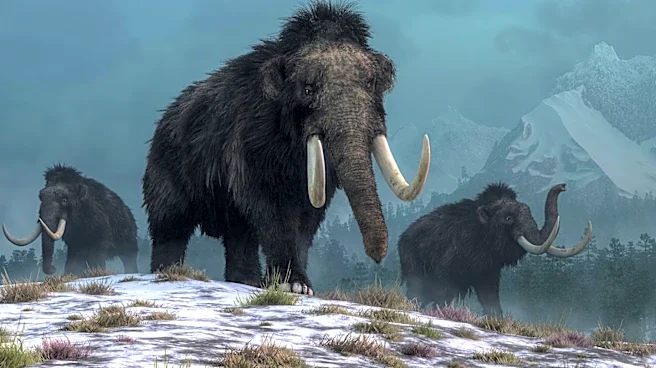
The potential funding round for Colossal Biosciences highlights the growing interest and investment in biotechnology and de-extinction projects. If successful, the funding could accelerate the company's efforts to reintroduce extinct species, such as the woolly mammoth and the dodo bird, into their native habitats. This could lead to the creation of biodiversity credits, a new market-based mechanism similar to carbon credits. The company's advancements in conservation technology and artificial wombs could also have significant implications for environmental preservation and human health. The interest from investors underscores the increasing value placed on innovative technologies that address ecological and biological challenges.
What's Next?
Colossal Biosciences is expected to continue its fundraising efforts, although details about the lead investors and the exact amount sought remain unclear. The company plans to further develop its artificial womb technology, with potential applications in human fertility treatments anticipated as early as next year. Additionally, Colossal's ongoing projects in de-extinction and conservation are likely to attract further attention and investment, potentially leading to new partnerships and revenue streams. The outcome of these efforts could influence the broader biotech industry and shape future approaches to biodiversity and conservation.