





What's Happening?
Major League Baseball (MLB) has announced significant changes to the format of the Home Run Derby for 2026, reverting to a swing-based competition. This change marks a departure from the timer-based format that has been in place since 2015. Under the new
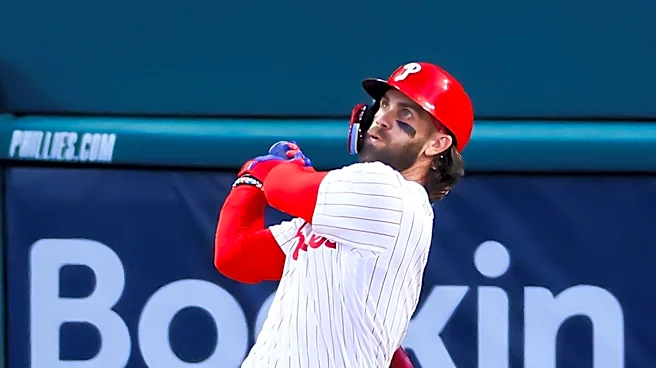
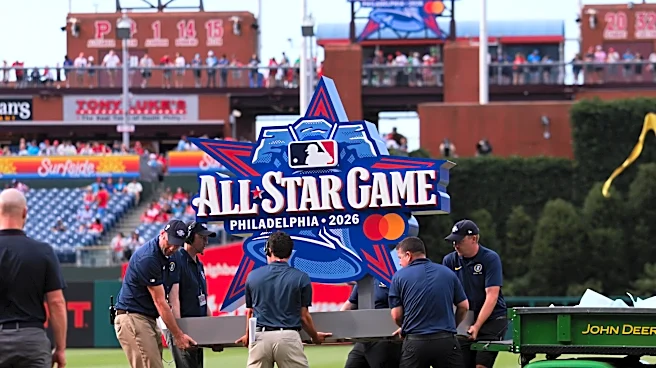
rules, hitters will be given a finite number of swings per round, and each swing will count towards their total, regardless of whether it results in a home run. If a player hits a home run on their final swing, they can continue swinging until they fail to hit another home run. The event will take place in Philadelphia as part of the All-Star Weekend, coinciding with the United States' 250th birthday celebrations. The competition will feature eight hitters in the first round, with the top four advancing to the semifinals based on their home run totals. Tiebreakers in the first round will be determined by the furthest home-run distance, while subsequent rounds will use a three-swing swing-off to resolve ties.
Why It's Important?
The changes to the Home Run Derby format are significant as they aim to enhance the excitement and competitiveness of the event. By reverting to a swing-based format, MLB is bringing back an element of strategy and skill, as players must be more selective with their swings. This could potentially increase viewer engagement and interest, especially with the event being broadcast by Netflix, introducing the Derby to a broader audience. The new format also aligns with MLB's efforts to innovate and keep the sport appealing to younger fans. The decision to host the event in Philadelphia during a milestone year for the United States adds a layer of historical significance, potentially boosting tourism and local economic activity.
What's Next?
As the 2026 Home Run Derby approaches, MLB will likely focus on promoting the new format and its strategic elements to fans and players alike. The league may also monitor the reception of the changes closely to assess their impact on viewership and fan engagement. Additionally, the involvement of Netflix in broadcasting the event could lead to further collaborations between MLB and streaming platforms, potentially reshaping how baseball is consumed by audiences. The success of the new format could influence future decisions regarding other MLB events and competitions.