
What's Happening?
SAP has been named a Leader in both the 2026 IDC MarketScape for Worldwide Warehouse Management for Manufacturing and the 2026 IDC MarketScape for Worldwide Warehouse Management for Retail. This recognition
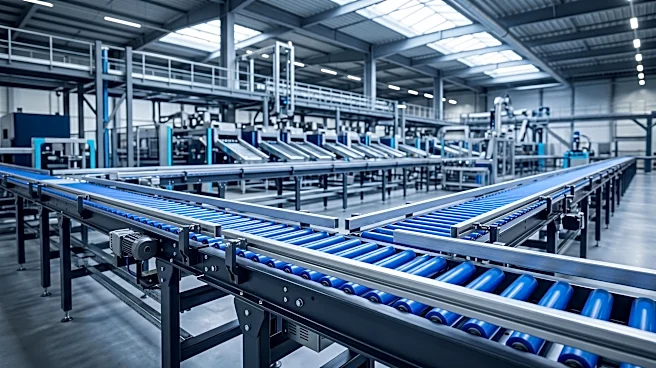
highlights SAP's focus on assisting companies in managing complex warehouse operations and integrating logistics with broader business processes. Modern warehouse management faces challenges from rising fulfillment expectations, labor shortages, and the increasing adoption of automation and artificial intelligence (AI). SAP Extended Warehouse Management (SAP EWM) is designed to handle high-volume warehouse operations and connect them with production, transportation, quality management, and the SAP S/4HANA environment. For manufacturing, this includes material staging, just-in-time supply, quality-controlled inventory, and integration with warehouse automation. In retail, SAP EWM supports omnichannel operations and connects with SAP S/4HANA Retail, SAP Commerce Cloud, and order management capabilities. SAP also offers SAP Logistics Management for less complex warehouse needs.
Why It's Important?
This recognition of SAP as a leader in warehouse management is significant for U.S. businesses, particularly in the manufacturing and retail sectors, as it validates the importance of advanced, integrated solutions for supply chain efficiency. In an era of rapid technological advancement and evolving consumer demands, effective warehouse management is crucial for maintaining competitiveness, minimizing costs, and ensuring customer satisfaction. The ability to synchronize warehouse operations with production and fulfillment, as offered by SAP, directly impacts a company's ability to respond to market changes, manage inventory effectively, and reduce operational bottlenecks. For U.S. industries, this means that investing in robust warehouse management systems like SAP EWM can lead to improved productivity, better resource utilization, and enhanced resilience against supply chain disruptions, ultimately contributing to economic stability and growth.
What's Next?
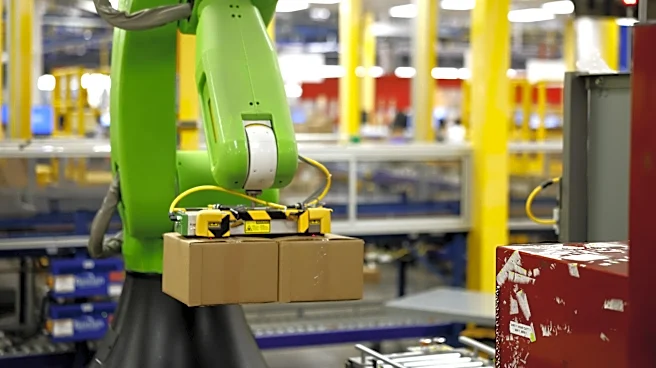
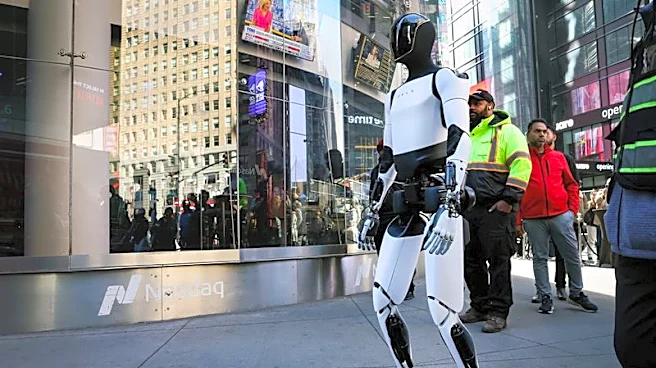
The continued evolution of warehouse management will see an increased integration of AI and automation. SAP is actively incorporating AI into warehouse operations through predictive capabilities for product slotting and labor planning, analytics, and simulation to identify process improvements. The development of Joule and agentic AI aims to help warehouse teams manage routine tasks and exceptions with less manual coordination. Furthermore, SAP is working on physical AI to connect business processes with robots and other physical systems, creating a closed loop between enterprise decisions and warehouse operations. This trajectory suggests that future warehouse management will be characterized by highly intelligent, automated, and interconnected systems, requiring businesses to adapt their strategies and workforce skills to leverage these advancements effectively. The focus will remain on moving goods more efficiently, optimizing asset utilization, and maintaining inventory visibility and control.
Beyond the Headlines
The advancements in warehouse management, particularly with the integration of AI and automation, raise important ethical and societal considerations. While these technologies promise increased efficiency and productivity, they also bring questions about the future of human labor in warehouses and the need for reskilling the workforce. The reliance on AI for decision-making in logistics also necessitates robust governance frameworks to ensure fairness, transparency, and accountability. Culturally, the shift towards highly automated warehouses could redefine the nature of work, emphasizing oversight and strategic management over manual tasks. The long-term implications include a potential transformation of the logistics industry, with a greater emphasis on data-driven insights and technological expertise, and a continuous need for businesses to balance technological adoption with human-centric approaches.