




What's Happening?
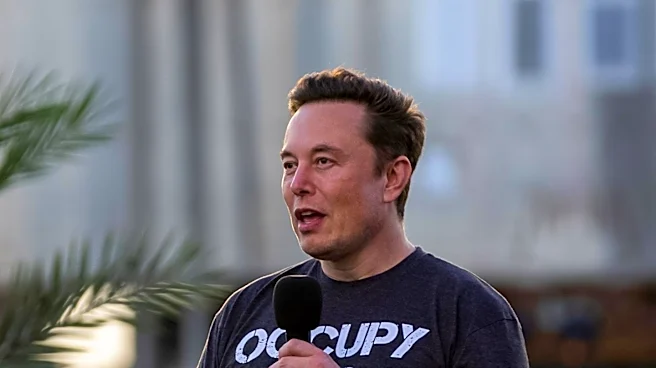
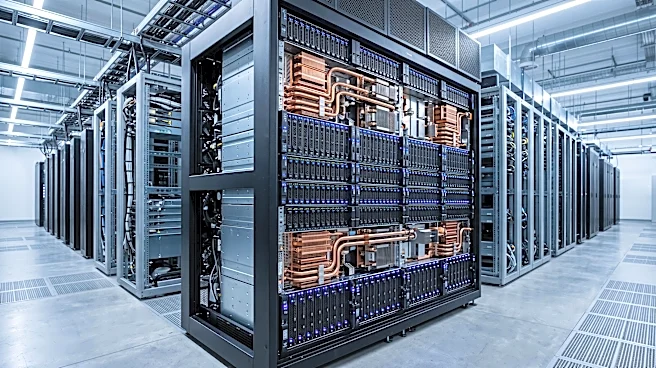
Elon Musk has warned that the artificial intelligence industry could face a significant cash shortage by 2027. This prediction comes as companies grapple with the immense costs and logistical complexities of bringing large-scale computing power online,
ensuring its cooling, and maintaining stable, reliable operations. Musk emphasized that even after substantial investments in computing capacity, it can take several months for the infrastructure to become stable enough to generate revenue. This delay could accumulate to hundreds of billions of dollars in additional working capital required across the industry, prompting Musk to question the source of such funding. His comments were made in response to insights from former Google engineer François Chollet, who noted that GPU spot prices are still rising, computing capacity remains difficult to obtain, and production capacities for HBM and DRAM are effectively fully pre-booked. Chollet suggested that the market either believes AI infrastructure development has peaked or that the current moment represents a rare buying opportunity.
Why It's Important?
The potential cash crunch highlighted by Elon Musk carries significant implications for the future trajectory of the AI industry. A severe shortage of working capital could impede the rapid expansion and innovation that currently characterize the sector. Companies, particularly those without the deep financial reserves of tech giants, might struggle to sustain operations during the prolonged period between infrastructure investment and revenue generation. This could lead to a slowdown in AI research and development, increased consolidation as smaller firms are acquired or fail, and a potential bottleneck in the deployment of advanced AI applications. The scarcity of critical hardware components like GPUs, HBM, and DRAM, as noted by François Chollet, further exacerbates the situation by driving up costs and extending lead times for essential equipment. This scenario could also influence broader economic trends, impacting investment in technology sectors and potentially affecting related markets like cryptocurrency, as investors assess the financial health and growth prospects of AI-driven enterprises.
What's Next?
The AI industry will likely need to re-evaluate its financial strategies and operational timelines in light of these warnings. Companies may explore more efficient ways to deploy and monetize AI infrastructure, potentially through new business models or collaborative ventures to share costs and risks. The ongoing demand for computing power will continue to pressure manufacturers of GPUs and memory, potentially spurring further investment in production capacity, though such expansions typically have long lead times. Stakeholders, including investors and policymakers, will be closely monitoring the industry's ability to secure the necessary funding and overcome logistical challenges. There may also be a push for greater transparency regarding the true costs and timelines associated with AI infrastructure development. The market's reaction to these financial pressures will determine whether the current moment is indeed a 'rare buying opportunity' or a precursor to a more challenging period for AI growth.
Beyond the Headlines
The concerns raised by Musk and Chollet point to a fundamental challenge in the AI revolution: the physical and financial constraints of scaling advanced technology. Beyond the immediate cash flow issues, this situation highlights the critical dependence of AI on a robust and accessible hardware supply chain. The 'brute-force compute' approach, while effective, is proving to be incredibly capital-intensive and resource-demanding. This could lead to a strategic re-evaluation within the AI community, potentially shifting focus towards more energy-efficient algorithms and hardware designs, or exploring distributed computing models to reduce reliance on massive, centralized data centers. Furthermore, the discussion brings to the forefront questions about the long-term economic sustainability of AI development and who ultimately bears the costs and risks. It underscores the need for a holistic approach that considers not just technological breakthroughs, but also the economic, logistical, and environmental implications of scaling AI globally.