



What's Happening?
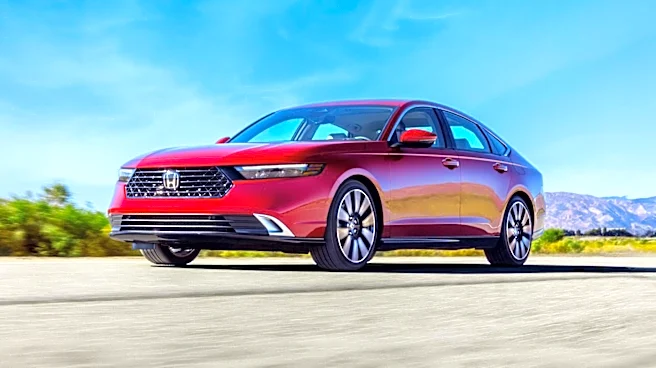
The Honda Accord is celebrating its 50th anniversary in the United States, a significant milestone for the vehicle that debuted in 1976. The Accord was introduced during a period of gas crisis, offering American drivers a new option that prioritized efficiency,
quality, and reliability. Over five decades, the Accord has evolved, consistently integrating breakthrough technology and raising industry standards for safety and performance. A key aspect of its identity has been its production in the United States, with the vehicle being designed and engineered specifically for American consumers. This commitment to local manufacturing has been central to the Accord's success and its deep connection with the American market. The Accord became America's best-selling car by 1989, signaling a new era where a Japanese nameplate achieved top sales in the U.S. market. Its continuous innovation has included features like in-car entertainment technology and navigation systems, which were significant advancements at the time of their introduction.
Why It's Important?
The Honda Accord's 50-year presence in the U.S. market highlights several important trends in the automotive industry and American consumer behavior. Its initial success demonstrated a shift in consumer preferences towards fuel-efficient and reliable vehicles, particularly in response to the 1970s gas crisis. This influenced other manufacturers to adapt their offerings. The Accord's long-standing commitment to being built in America underscores the economic impact of foreign direct investment and job creation within the U.S. manufacturing sector. Its consistent innovation in safety, performance, and technology has pushed industry boundaries, benefiting American drivers with advanced features that eventually became standard across many vehicle segments. The Accord's ability to maintain its relevance and popularity for half a century also reflects its adaptability to changing market demands and its strong brand loyalty among U.S. consumers, influencing competitive strategies in the mid-size sedan category.
What's Next?
Looking ahead, the Honda Accord is expected to continue its evolution, with an increased emphasis on its sporty characteristics and sophisticated design. The brand aims to combine its legacy with future innovations, focusing on performance, efficiency, and advanced technology for new generations of drivers. This suggests that Honda will likely continue to invest in research and development to keep the Accord competitive in a rapidly changing automotive landscape, which includes the growing demand for electric vehicles and advanced driver-assistance systems. The ongoing commitment to building the Accord in America is also likely to persist, reinforcing its connection to the U.S. market and its contribution to the domestic manufacturing industry. Future iterations of the Accord will likely aim to maintain its reputation for value, driving enjoyment, and cutting-edge features, ensuring its continued relevance in the U.S. automotive sector.
Beyond the Headlines
The Accord's journey over 50 years in the U.S. transcends mere vehicle sales; it represents a cultural integration and a testament to evolving consumer values. Its success challenged the traditional dominance of American car manufacturers and demonstrated that foreign brands could not only compete but also lead in the U.S. market by offering compelling alternatives. This shift had broader implications for global trade and manufacturing practices, fostering a more competitive and diverse automotive landscape. The Accord's emphasis on efficiency and reliability also played a role in shaping environmental consciousness among consumers, long before climate change became a mainstream concern. Its enduring presence reflects a successful blend of global design philosophy with local manufacturing and consumer-centric adaptation, setting a precedent for other international companies entering the U.S. market.