


What's Happening?
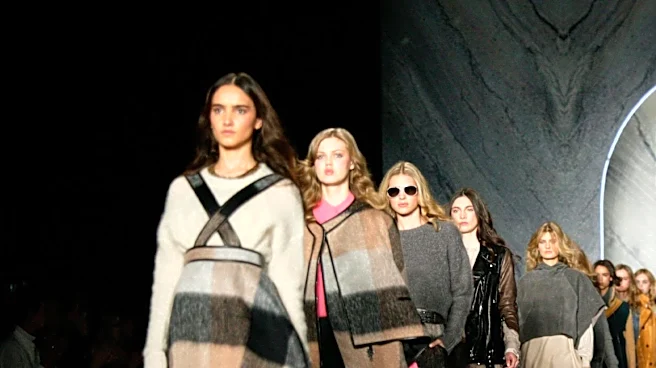
Punk fashion, characterized by its edgy aesthetic including studs, chains, and grommets, is making a significant comeback in 2026, appearing on luxury catwalks for Spring/Summer 2027 collections. This resurgence traces back to the anarchist punk movement
of the 1970s, where DIY alterations of everyday clothes served as a form of protest against capitalism and a means to express individuality. Brands like Prada, Jil Sander, Etro, Roberto Cavalli, Tom Ford, Junya Watanabe, Michael Kors, and Yohji Yamamoto are incorporating punk-inspired elements into their designs. For many Gen Z consumers, this 'edgy' aesthetic has become mainstream, with statement pieces designed to stand out in algorithm-driven social media feeds, as noted by Emily Post, a Master's student in Fashion Styling.
Why It's Important?
The return of punk fashion to mainstream and luxury markets raises important questions about the commodification of counter-cultural movements. What was once a symbol of anti-consumerist protest and individuality is now being adopted by high-end brands, potentially diluting its original meaning. This trend highlights the fashion industry's continuous cycle of reinterpreting historical styles, often stripping them of their political or social context. For Gen Z, who value individuality and self-expression, the 'edgy' aesthetic offers a way to stand out, particularly in online spaces. However, it also prompts a debate on whether buying into this aesthetic truly represents rebellion or merely a purchase for social currency, as suggested by the source.
What's Next?
The continued integration of punk elements into mainstream fashion is likely to evolve, with designers exploring new ways to incorporate its rebellious spirit. This could lead to further hybridization of styles, blending punk aesthetics with other fashion trends. The debate around authenticity and commodification will likely persist, influencing how consumers perceive and engage with these styles. Social media will continue to be a key platform for showcasing and interpreting these trends, with influencers playing a role in shaping their adoption. The long-term impact could see punk's influence becoming a permanent fixture in the fashion lexicon, albeit in a more commercialized form, or it could lead to new counter-movements seeking alternative forms of expression.
Beyond the Headlines
The re-emergence of punk fashion delves into the complex relationship between subculture, commerce, and identity. It questions whether a style born out of anti-establishment sentiment can retain its provocative edge when embraced by the very systems it once opposed. This phenomenon reflects a broader societal trend where unique expressions are quickly absorbed and marketed, blurring the lines between genuine rebellion and curated image. For Gen Z, who navigate a highly digital and image-conscious world, the adoption of punk aesthetics might be less about political ideology and more about crafting a distinct online persona. This raises ethical considerations for brands, prompting them to consider the historical and cultural significance of the styles they appropriate, and for consumers, encouraging a more critical engagement with fashion trends.