





What's Happening?
The U.S. Department of Commerce has announced the final results of its 20th administrative review of the antidumping duty order on certain frozen warmwater shrimp from Vietnam. This review covers imports that entered the United States between February
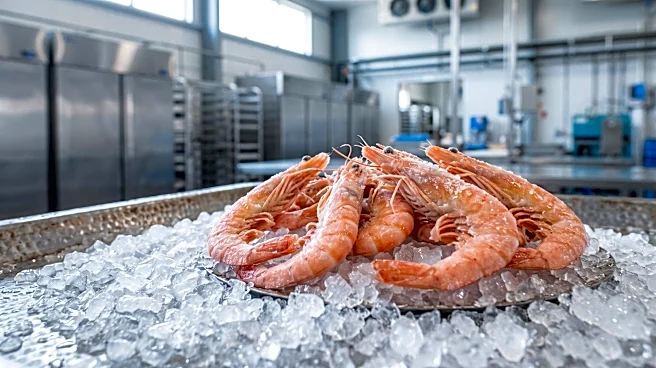
1, 2024, and January 31, 2025. The Commerce Department found 131 Vietnamese producers and exporters to be part of the Vietnamese government, assigning them a duty rate of 25.76 percent. For independent Vietnamese exporters, STAPIMEX received a 6.36 percent dumping margin, and FIMEX received 10.71 percent. Twenty-seven other Vietnamese shrimp exporters, demonstrating independence from their government, were assigned a separate rate of 7.59 percent. This marks the highest dumping margin for an independent Vietnamese exporter in the history of the antidumping duty order, which was implemented in February 2005. In 2024, Vietnam exported over 112.7 million pounds of frozen warmwater shrimp to the U.S., valued at $536.9 million. Many U.S. importers now face significant additional duty bills for past entries.
Why It's Important?
These new duties are significant for the U.S. shrimp industry, particularly for local shrimpers who have faced immense pressure from cheap imports. The Southern Shrimp Alliance, through its Executive Director Blake Price, expressed gratitude for the Trump Administration's commitment to fair trade, noting that these efforts prevent market conditions from deteriorating further due to an influx of inexpensive shrimp from other countries like Ecuador and India. The imposition of these duties aims to level the playing field for domestic producers by counteracting unfair pricing practices by foreign exporters. U.S. importers of Vietnamese shrimp will now incur substantial additional costs, estimated to be over $9.2 million for STAPIMEX imports, more than $6.3 million for FIMEX imports, and approximately $19 million collectively for other Vietnamese exporters. This financial impact could lead to higher prices for consumers or a shift in sourcing for importers.
What's Next?
U.S. importers of Vietnamese frozen warmwater shrimp will now be required to pay significant additional duties on past entries from the February 2024 to January 2025 period. For future imports, cash deposit rates will adjust: STAPIMEX's rate will decrease from 25.76 percent to 6.36 percent, while FIMEX's rate will increase from 4.28 percent to 10.71 percent. The 27 other companies with a 'separate rate' will see their cash deposit rates rise from 4.28 percent to 7.59 percent. These changes are expected to further disincentivize Vietnamese exporters from selling shrimp at a loss in the U.S. market to maintain market share. The Southern Shrimp Alliance anticipates that these measures will continue to support the domestic shrimp industry against unfairly traded imports, potentially leading to a further reduction in Vietnamese shrimp imports to the U.S., which have already seen a 30 percent drop in volume through the first eight months of 2026 compared to 2025.
Beyond the Headlines
The Commerce Department's actions reflect a broader U.S. trade policy stance aimed at enforcing fair trade laws and protecting domestic industries from foreign dumping. This particular case highlights the ongoing challenges faced by U.S. agricultural and seafood sectors in competing with international markets where different economic structures and government subsidies may allow for lower export prices. The increased dumping margins for some Vietnamese exporters suggest an attempt to maintain market presence despite competitive pressures from other low-cost producers. This situation underscores the complex interplay between international trade regulations, domestic industry protection, and global supply chains. The long-term implications could include a restructuring of the U.S. shrimp import market, potentially leading to increased reliance on domestic production or imports from other countries not subject to such high duties, thereby shifting global trade dynamics for seafood.