





What's Happening?
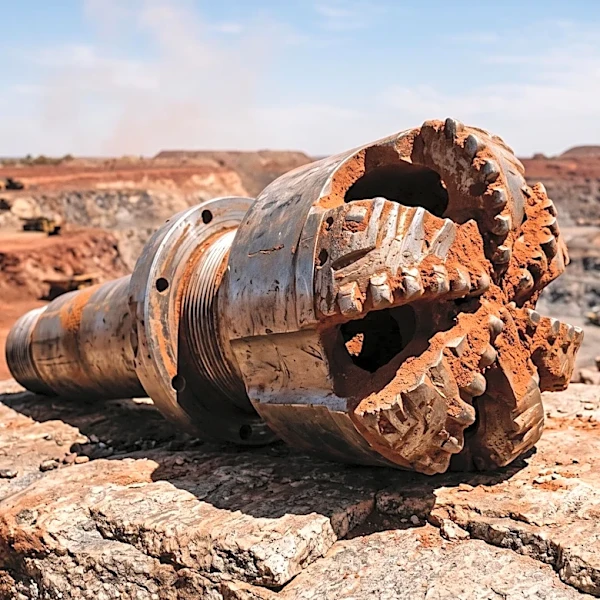
Haranga Resources has announced its highest gold assay results from two phases of underground drilling at the Lincoln Gold Project in California, US. Specifically, hole DDH0297 yielded 7.5 meters at 19.21 grams per tonne gold (Au) from 60 meters, including
a high-grade section of 0.6 meters at 221 g/t Au from 63.6 meters. Other significant findings from Crosscut 11, accessed after dewatering historic workings, include 30.5 meters at 6.65 g/t Au and 14.3 meters at 7.16 g/t Au. The company completed 18 holes, exceeding its initial plan, and also explored a previously sparsely drilled area between the Lincoln and Comet zones. Haranga Resources, an Australian gold developer, operates a permitted underground mine and a mill in the US that last produced gold in 2022. The company is awaiting assays from the final 12 holes to update its resource model.
Why It's Important?
These high-grade gold assay results are significant for Haranga Resources as they could lead to a reclassification of the inferred resource at the Lincoln-Comet project to an indicated category. This reclassification is crucial for advancing mine planning and a Prefeasibility Study, which are essential steps toward potential gold production. The Lincoln-Comet mineral resource estimate currently stands at 1.5 million tonnes grading 5.7 g/t Au for 275,000 ounces of contained gold, with 33% already in the indicated category. Increased confidence in the resource estimate can attract further investment and potentially accelerate the development of the project, contributing to the domestic gold supply in the U.S. The success of this project could also stimulate economic activity in California's Mother Lode Gold Belt, creating jobs and generating revenue through mining operations.
What's Next?
Haranga Resources' immediate next step is to receive the final assays from the remaining 12 drill holes. Once these results are available, the company will incorporate all phase-two assays into an updated resource model. This updated model will be critical for assessing how much of the inferred resource can be reclassified as indicated, which will directly support mine planning and the initiation of a Prefeasibility Study. Additionally, Haranga expects to report within a month on whether historical assays from South Spring Hill support an inferred resource estimate. A positive outcome from these assessments could lead to a final investment decision and the commencement of full-scale development activities at the Lincoln Gold Project, potentially bringing it closer to production.
Beyond the Headlines
The successful development of projects like the Lincoln Gold Project highlights the ongoing importance of domestic mineral resources in the U.S. While the focus is often on critical minerals for new technologies, gold mining continues to be a significant industry, particularly in historical gold-producing regions like California. The reclassification of resources from inferred to indicated is a key de-risking step in mining, demonstrating a higher level of geological confidence and economic viability. This process is vital for securing financing and regulatory approvals. Furthermore, the project's progress could have broader implications for the local communities, including potential employment opportunities and infrastructure development, while also raising considerations about environmental stewardship and sustainable mining practices in a historically rich but environmentally sensitive area.