


What's Happening?
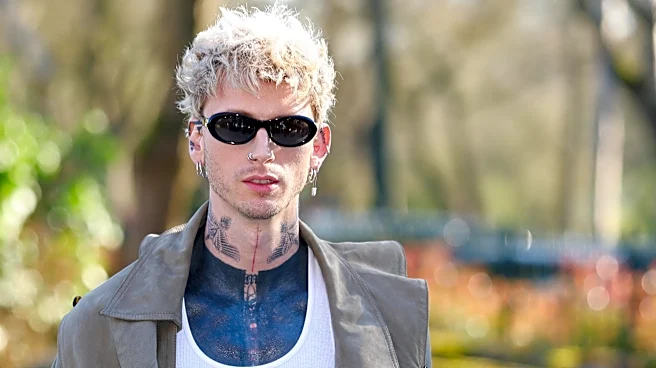
Machine Gun Kelly, the rapper and rocker, has publicly criticized individuals who undergo full-body tattoo procedures while under anesthesia. He expressed his disapproval on X, stating, “You didn’t earn that ink,” and further commented on the use of diapers
during such procedures. His remarks were directed at a video depicting a man receiving extensive tattoos while sedated. Machine Gun Kelly views this practice as a 'cop-out' that undermines the traditional tattoo culture, which he believes involves enduring the pain and process of getting inked. This stance has generated significant discussion and backlash online, with many social media users accusing him of hypocrisy and being overly dramatic.
Why It's Important?
This incident highlights a cultural debate within the tattoo community regarding the authenticity and 'earning' of body art. Machine Gun Kelly's comments, coming from a prominent figure known for his extensive tattoos and unconventional style, draw attention to differing philosophies on pain, endurance, and the meaning behind tattoos. The online reaction underscores the public's readiness to challenge celebrity opinions, especially when they touch upon personal choices and perceived gatekeeping. It also reflects broader discussions about the evolving nature of body modification and the role of technology (like anesthesia) in altering traditional practices. The controversy could influence how tattoo artists and clients approach large-scale projects, potentially leading to more open conversations about pain management and the 'value' of the tattoo experience.
What's Next?
The debate surrounding anesthesia tattoos is likely to continue within online communities and potentially among tattoo artists and enthusiasts. Machine Gun Kelly's initial comments have already sparked a wave of responses, and it is probable that more individuals will weigh in on the matter, either supporting his view or criticizing his stance. This could lead to further discussions on social media platforms, in tattoo forums, and potentially in interviews with other public figures in the tattoo world. The incident may also prompt a re-evaluation of the ethics and cultural implications of using medical interventions to bypass the traditional discomfort associated with extensive tattooing. It remains to be seen if this will lead to any significant shifts in practice or perception within the broader tattoo industry.
Beyond the Headlines
Beyond the immediate controversy, Machine Gun Kelly's comments touch upon deeper themes of authenticity, resilience, and the performative aspects of identity. His assertion that one must 'earn' their ink by enduring pain reflects a traditionalist view that connects physical suffering with the value and meaning of a tattoo. This perspective can be seen as a commentary on a perceived softening of cultural practices, where convenience might overshadow the symbolic weight of an experience. The backlash he received, however, suggests a counter-narrative that prioritizes individual choice, comfort, and accessibility in body modification. This incident also subtly highlights the ongoing tension between traditional and modern interpretations of art, culture, and personal expression in an increasingly technologically advanced world. It raises questions about what constitutes 'true' dedication or experience in any given subculture.