








What's Happening?
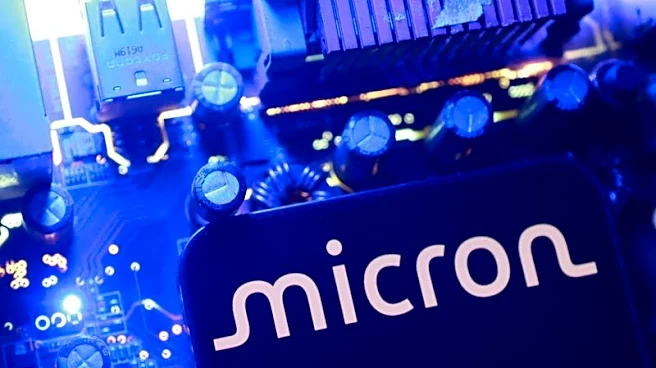
Micron Technology has reported a remarkable 87% gross margin in its core data center unit for the last quarter, a figure typically associated with software companies rather than hardware manufacturers. This achievement is largely attributed to the soaring
demand for memory chips, driven by the rapid expansion of artificial intelligence (AI) applications. The company's data center business generated a record $11.5 billion in revenue, marking a 103% increase from the previous quarter. This surge in demand has been fueled by Micron's high-bandwidth memory (HBM) products, which have already shipped over $1 billion worth of its latest generation. The entire 2026 supply of these products is sold out under multi-year agreements, indicating a sustained demand that is expected to persist beyond 2027.
Why It's Important?
The significant increase in Micron's gross margin highlights the critical role of memory chips in the AI sector, positioning them as one of the most valuable components in the industry. This development underscores the growing importance of AI in driving technological advancements and economic growth. For Micron, this translates into substantial near-term earnings potential, with the company projecting fourth-quarter revenue of approximately $50 billion at a gross margin near 86%. However, despite these record results, Micron's stock remains undervalued, trading at less than seven times forward earnings. This suggests that investors remain cautious, anticipating a potential downturn in the cyclical memory market.
What's Next?
Micron's future performance will largely depend on the sustainability of the current demand for memory chips. The company has announced plans to increase its U.S. investment to over $250 billion through 2035, which could help maintain its competitive edge. However, the cyclical nature of the memory market poses a risk, as historical patterns suggest that capacity eventually catches up with demand, leading to price declines. Investors will be closely monitoring whether this cycle will break the traditional pattern, with the potential for prolonged tight supply due to the complexity of producing HBM and the time required to bring new capacity online.