


What's Happening?
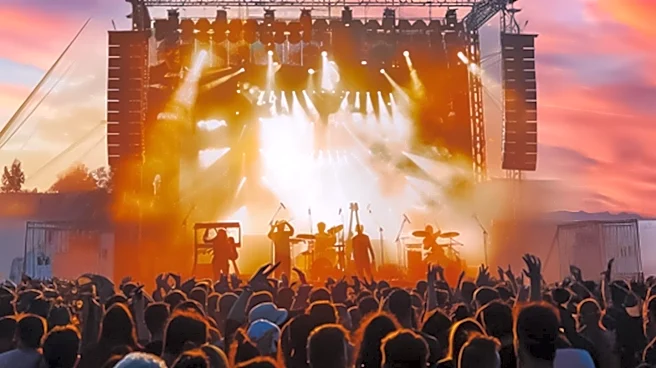
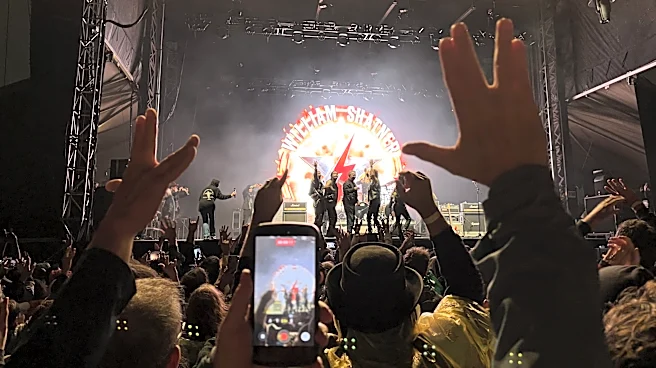
Riot Fest, a music festival in Chicago, delayed the start of its third day on Sunday until 2 p.m. due to overnight rains and muddy park grounds. The festival organizers announced the delay on social media, stating their intention to 'remediate the moistness
of the park grounds.' This decision followed an early closure on Saturday, which saw several sets cut short or abbreviated, including Tool's headlining performance, which concluded at 6 p.m. instead of the scheduled 7 p.m. The National Weather Service indicated a chance of precipitation continuing in Chicago until 7 p.m. on Sunday. Despite the weather challenges, organizers later released an updated schedule, confirming that the end-of-day headliners remained intact and expressed confidence that no further delays or changes were expected for the day.
Why It's Important?
The weather-related disruptions at Riot Fest highlight the significant operational and financial challenges faced by large-scale outdoor events. Delays and early closures can lead to substantial logistical complications, affecting artist schedules, vendor operations, and attendee experience. For festival-goers, these changes can result in missed performances and dissatisfaction, potentially impacting future attendance and ticket sales. Economically, such disruptions can lead to revenue losses for organizers, local businesses, and vendors who rely on the influx of festival attendees. The need for rapid remediation of park grounds also underscores the considerable resources and planning required to manage outdoor events, especially in unpredictable weather conditions, emphasizing the vulnerability of the entertainment industry to environmental factors.
What's Next?
Following the delayed opening, Riot Fest organizers released an updated schedule for Sunday, aiming to proceed with the remaining performances. The festival staff and crew worked to ensure the safety and readiness of Douglass Park for the final day. Future planning for similar large-scale outdoor events in Chicago and other regions prone to inclement weather may involve more robust contingency plans, including enhanced drainage systems, alternative indoor venues, or more flexible scheduling options. Organizers will likely assess the impact of these weather-related incidents on attendee satisfaction and operational efficiency to inform strategies for upcoming festivals, potentially leading to adjustments in insurance policies or site selection to mitigate similar risks.
Beyond the Headlines
The challenges faced by Riot Fest extend beyond immediate logistical concerns, touching upon broader issues of urban planning, public space management, and the environmental impact of large gatherings. The 'remediation of moistness' points to the delicate balance between utilizing public parks for events and preserving their ecological integrity. Such incidents can spark discussions about the sustainability of large festivals in urban green spaces and the responsibility of organizers to minimize environmental disruption. Furthermore, the reliance on social media for real-time updates during crises underscores the evolving role of digital communication in event management and public relations, shaping how organizers interact with and manage expectations of a large, dispersed audience.