








What's Happening?
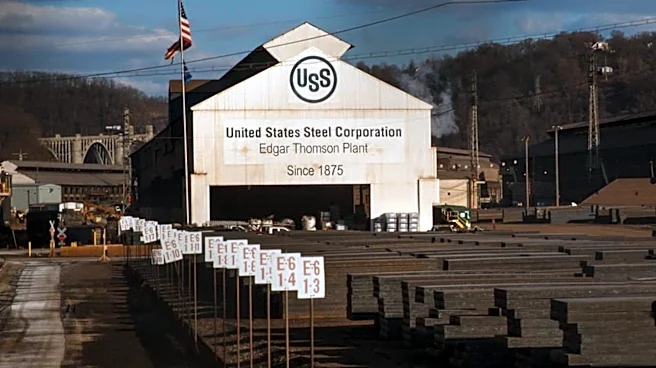
Mon Valley communities and school districts in Pennsylvania are facing over $1 million in property tax losses this year due to U.S. Steel's property tax appeals and a subsequent settlement. U.S. Steel's assessed property value in Allegheny County, primarily
its Mon Valley Works, has decreased from $58.5 million to $33.7 million. The company opted for a credit arrangement instead of refunds for past tax years, applying these credits to its 2026 and 2027 tax bills. This means some municipalities, like North Braddock, will receive no property taxes from U.S. Steel for these years and only half of its new tax bill in 2028, resulting in a total loss of $175,000 over three years for the borough. The Clairton City School District, already under financial watch, is losing $280,000 annually, and the city of Clairton is losing $104,000.
Why It's Important?
These tax losses significantly impact the operational budgets of local governments and school districts in the Mon Valley. For instance, North Braddock has had to forgo hiring a new code enforcement officer, despite facing approximately 400 code violations this year. The West Mifflin Area School District is experiencing a $273,000 annual decrease in tax revenue, impacting its operating budget. The situation highlights a broader issue where large corporations can leverage property tax appeal processes, particularly when common level ratios decline, to reduce their tax burden. This can shift the tax burden to residential property owners and force municipalities to consider raising taxes or cutting essential services, such as road paving, to compensate for the lost revenue. The financial strain is particularly acute for districts like Clairton City School District, which serves a high percentage of low-income students and relies heavily on state funding.
What's Next?
Local leaders are awaiting a countywide reassessment, ordered by an August Allegheny Court of Common Pleas ruling to be completed by 2032, which they hope will provide some relief for residential taxpayers and bring more uniformity to the property tax system. However, there are concerns that property owners might rush to reassess their properties after 2032, potentially putting taxing bodies in a similar predicament. U.S. Steel has stated it will review future assessments and make decisions on further appeals based on the circumstances at that time. Meanwhile, communities like West Mifflin are grappling with the challenge of maintaining services without significant cuts, despite substantial revenue losses. The ongoing financial adjustments will likely continue to shape local government decisions and public services in the Mon Valley.
Beyond the Headlines
The situation in the Mon Valley underscores the complex interplay between corporate tax strategies, local government funding, and community well-being. While U.S. Steel maintains it pursued a lawful appeals process to ensure fair assessments and has contributed to local communities through donations, the financial impact on these communities is undeniable. The reliance of some municipalities on a single large industrial taxpayer, like U.S. Steel, creates vulnerability when that entity successfully reduces its tax obligations. This scenario raises questions about the long-term sustainability of local funding models in industrial regions and the need for more robust mechanisms to ensure equitable tax contributions from large corporations, especially in areas with significant economic challenges. The court-ordered reassessment by 2032 offers a potential, albeit distant, opportunity to re-evaluate and stabilize the property tax landscape.