





What's Happening?
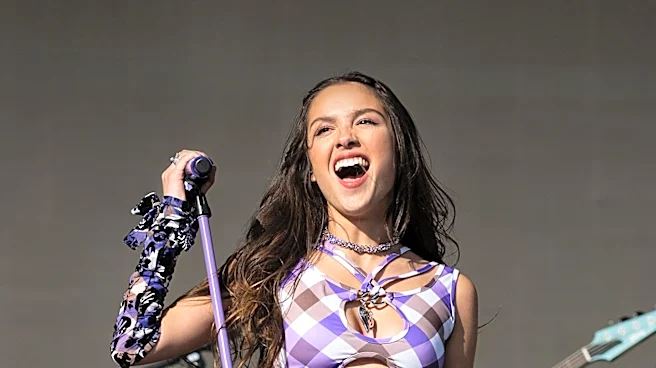
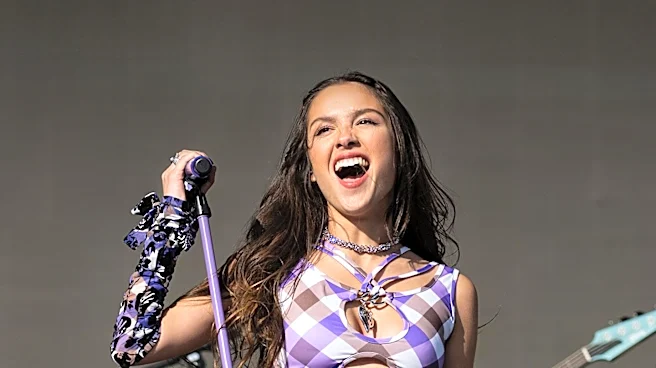
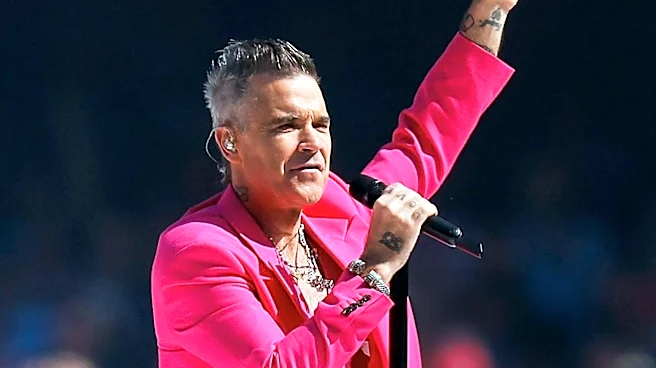
Robbie Williams has publicly responded to online accusations that Olivia Rodrigo's recent Christmas song, inspired by The Waitresses' 'Christmas Wrapping,' contains similarities to his 2012 hit 'Candy.' Williams, in an expletive-laden social media post,
stated he is not pursuing any copyright claims against Rodrigo. He expressed his admiration for her music, specifically mentioning her 2021 single 'Brutal,' and dismissed the notion of 'ambulance chasing' in the music industry, where fans or others seek out minor similarities to instigate copyright lawsuits for financial gain. Williams emphasized that in an industry with vast amounts of music, accidental echoes are inevitable and should not stifle creativity. He also acknowledged having faced similar accusations himself in the past.
Why It's Important?
This development highlights a recurring issue within the music industry concerning copyright infringement and the fine line between inspiration and plagiarism. Williams's stance, which prioritizes artistic freedom and acknowledges the natural evolution of musical ideas, offers a counter-narrative to the often litigious environment surrounding song similarities. His comments could influence how artists and the public perceive such allegations, potentially fostering a more understanding approach to musical creation rather than an immediate rush to legal action. The situation also underscores the power of fan communities in identifying perceived similarities, which can quickly escalate into public discourse and pressure on artists, regardless of the legal merit of the claims.
What's Next?
While Robbie Williams has explicitly stated he will not pursue legal action, the broader conversation around musical originality and copyright in the digital age is likely to continue. This incident may encourage other established artists to voice similar perspectives, potentially leading to a more nuanced public understanding of how music is created and influenced. For Olivia Rodrigo, Williams's public support could alleviate pressure from fans and critics regarding the alleged similarities, allowing her to focus on her creative work without the immediate threat of a high-profile legal battle. The music industry may also see continued debate on the criteria for copyright infringement, especially as more music is produced and shared globally.
Beyond the Headlines
The incident touches upon the ethical dimensions of artistic creation and the concept of originality in a world saturated with content. Williams's argument that 'we all stand on the shoulders of people who came before us' suggests a philosophical view on art, where influence and unconscious echoes are part of the creative process. This perspective challenges the strict legal interpretations of copyright that can sometimes stifle innovation by penalizing unintentional similarities. It also raises questions about the role of 'toxic fandoms' and online communities in generating controversy, sometimes without a full understanding of legal or artistic contexts. The discussion could lead to a broader re-evaluation of how copyright law balances protection for creators with the encouragement of new artistic expression.