





What's Happening?
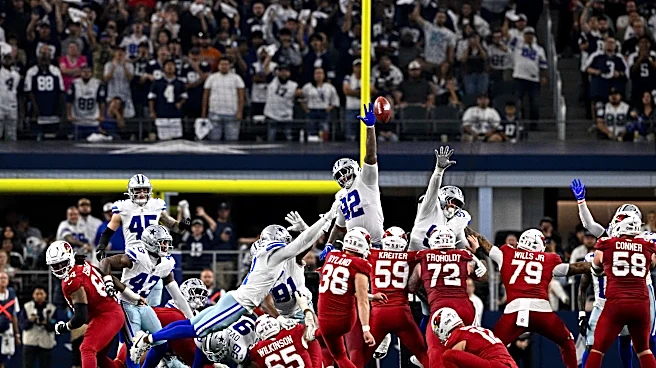
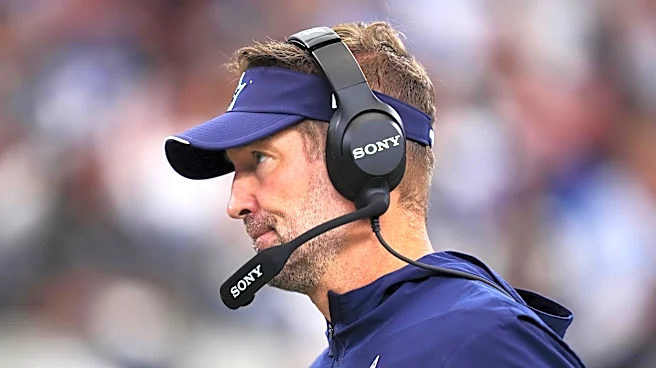
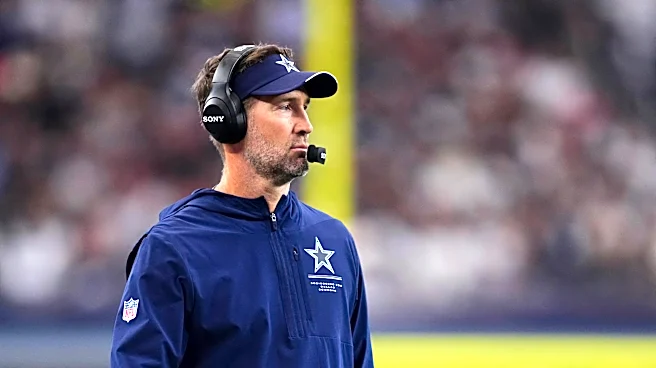
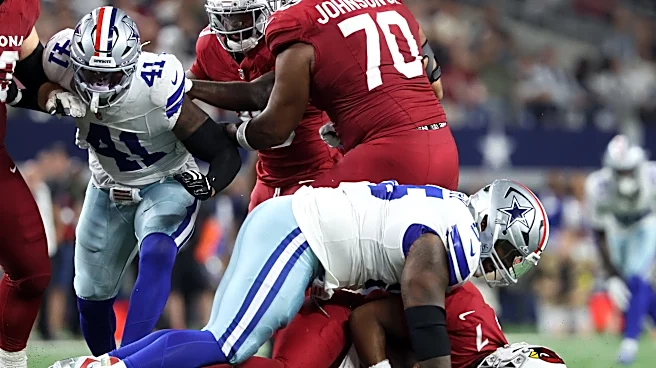
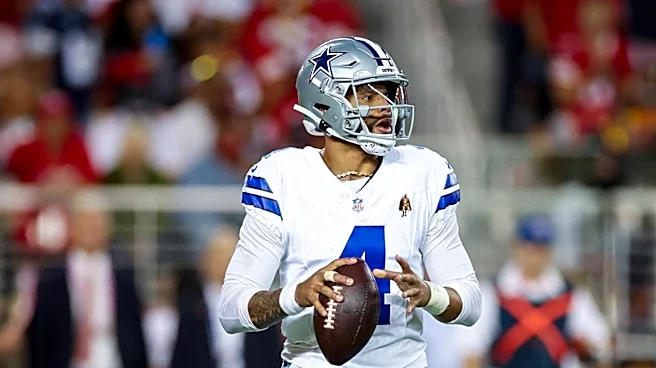
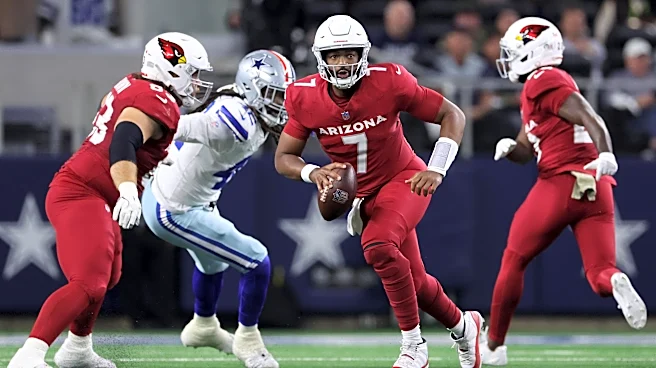
Dallas Cowboys quarterback Dak Prescott has publicly stated that the team needed a more aggressive offensive approach during their recent overtime loss to the Arizona Cardinals. This admission has intensified scrutiny on head coach Brian Schottenheimer,
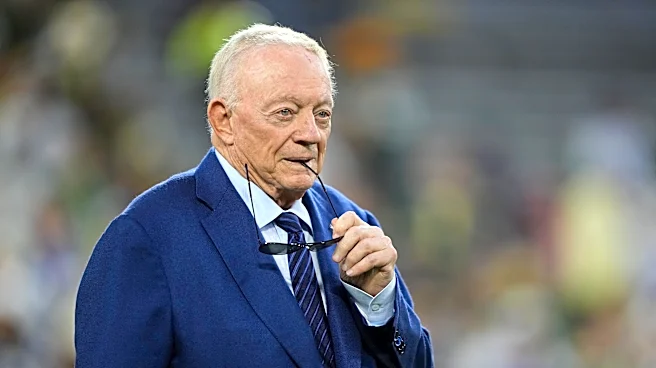
whose offensive play-calling has been questioned after several disappointing performances. In the game, the Cowboys managed only 261 total yards while their defense allowed 467. Prescott completed 19 of 29 passes for 195 yards and a touchdown, also adding 20 rushing yards and another score. Despite defending Schottenheimer, Prescott's comments highlight a growing concern within the team regarding their offensive strategy. Cowboys owner and general manager Jerry Jones acknowledged the team's overall struggles but dismissed immediate coaching changes, stating that the issues extend beyond just the head coach and are an 'indictment of the whole show.'
Why It's Important?
This development is significant for the Dallas Cowboys as it signals potential internal friction regarding offensive strategy and places increased pressure on head coach Brian Schottenheimer. Public comments from a franchise quarterback like Dak Prescott, even if not directly critical, can influence team morale, fan perception, and ultimately, coaching decisions. The Cowboys' 3-5 record already puts them in a precarious position, and a lack of offensive consistency could jeopardize their season. If the team continues to struggle offensively, Schottenheimer's job security will likely remain a central topic, impacting the team's long-term strategic planning and player development. The situation also highlights the delicate balance between player input and coaching authority in professional sports, where a star player's opinion can carry substantial weight.
What's Next?
The immediate focus for the Dallas Cowboys will be their next game, where Brian Schottenheimer's offensive play-calling will be under intense scrutiny. The team needs to demonstrate a more effective and aggressive offensive strategy to alleviate pressure on the coaching staff and improve their standing in the league. If offensive struggles persist, despite Jerry Jones's current stance against mid-season coaching changes, the calls for adjustments could intensify from both fans and media. Dak Prescott's performance and leadership will also be crucial in navigating this period, as the team looks to recover from its poor start. The coming weeks will reveal whether Schottenheimer can adapt his approach to meet the team's needs and Prescott's expectations, or if further changes will be considered.
Beyond the Headlines
Beyond the immediate on-field performance, this situation touches upon the broader dynamics of accountability and leadership within a high-profile sports organization. While Dak Prescott defended his coach, his call for more aggression subtly shifts some of the responsibility for offensive stagnation towards the play-caller. This can create a complex environment where players might feel empowered to voice strategic preferences, potentially challenging the traditional hierarchy. For the Cowboys, a team with a massive fan base and significant media attention, internal disagreements or perceived weaknesses in leadership can have amplified effects on brand perception and fan engagement. The long-term implications could involve a re-evaluation of coaching philosophies and a greater emphasis on collaborative strategic development between star players and coaching staff in the NFL.