





What's Happening?
JD Sports has successfully rolled out mobile RFID inventory tracking across 414 of its stores in the UK and Ireland within approximately three months. This initiative has led to a reported 98% on-shelf availability and a 20% increase in replenishment
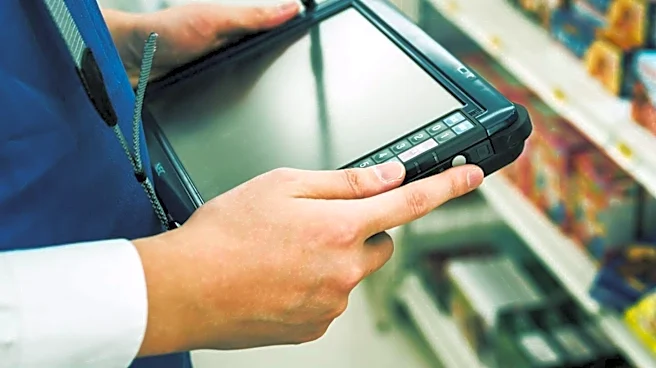
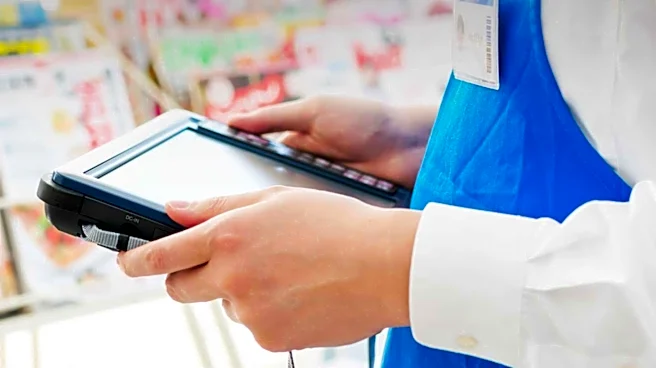
speed. Store associates utilize RFID sleds attached to their existing mobile computers to conduct stock counts by scanning items on the sales floor and in stockrooms. This technology allows for frequent inventory checks, ranging from twice a week to daily, ensuring real-time stock accuracy. The rapid deployment was facilitated by a system that requires minimal on-site setup, with associates simply clipping the RFID sled onto their familiar devices. The goal of this implementation is to enhance omnichannel selling capabilities, particularly supporting services like one-hour click-and-collect, which rely heavily on precise inventory data. The project involved a five-store pilot before scaling up, with an average deployment pace of 26 stores per week after the initial launch.
Why It's Important?
This rapid and successful RFID implementation by JD Sports highlights a significant trend in retail technology adoption aimed at improving operational efficiency and customer satisfaction. For U.S. retailers, this case study demonstrates the potential for quick deployment of advanced inventory management systems, which can directly impact profitability and competitive advantage. Accurate, real-time inventory data is crucial for omnichannel strategies, enabling retailers to reliably offer services like in-store pickup and same-day delivery. The reported improvements in on-shelf availability and replenishment speed translate to fewer lost sales due to stockouts and a more efficient use of store associate time, allowing them to focus more on customer service. This move also underscores the growing importance of seamless technology integration that minimizes disruption to daily store operations, a key consideration for any large-scale retail technology rollout in the U.S. market.
What's Next?
The success of JD Sports' RFID rollout in the UK and Ireland sets a precedent for potential expansion into its North American operations, which include over 2,500 stores under banners like DTLR and Shoe Palace. These U.S. brands already utilize Android-based devices for other retail solutions, suggesting a potential compatibility for similar RFID technology. The key question will be whether the rapid deployment pace of 26 stores per week can be replicated across the diverse U.S. retail landscape. If successful, this could significantly enhance JD Sports' competitive position in the U.S. market by improving inventory accuracy and customer fulfillment capabilities. Other U.S. retailers, including major players like Walmart and Kroger, are also exploring or implementing RFID for inventory management, indicating a broader industry shift towards this technology to address challenges like food waste, on-shelf availability, and sales optimization.
Beyond the Headlines
The adoption of RFID technology by major retailers like JD Sports signifies a deeper shift in how physical stores operate, moving towards a more data-driven and integrated model. Beyond immediate operational benefits, this technology enables a more granular understanding of product movement and customer demand, which can inform merchandising strategies, supply chain optimization, and even store layout design. The ability to conduct daily stock counts transforms inventory management from a periodic, labor-intensive task into a continuous, real-time process, fundamentally altering how retailers manage their assets. This also raises implications for loss prevention, as frequent counts allow for earlier detection and investigation of discrepancies. The emphasis on easy-to-use technology that integrates with existing tools suggests a broader trend towards user-centric design in retail tech, aiming to empower store associates rather than burden them with complex new systems. This evolution is critical for retailers looking to bridge the gap between online and in-store experiences.