






What's Happening?
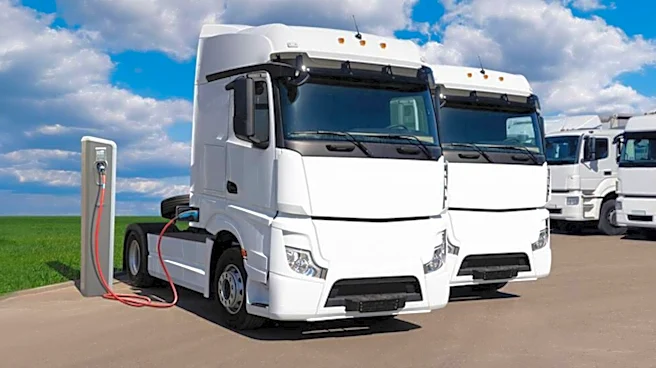
Lazer Logistics, North America's largest provider of outsourced yard logistics, has significantly expanded its fleet of electric terminal tractors, now operating over 150 Class 8 battery-electric units across 21 U.S. states and Canada. These electric vehicles
(EVs), primarily supplied by Orange EV, are seamlessly integrated alongside the company's diesel fleet. Lazer Logistics began its EV program with three electric units in 2017 and has since accumulated over 3 million electric miles and millions of yard moves, generating extensive operational data. This data indicates that electric terminal tractors offer more than 50% lower maintenance costs per operating hour compared to diesel units and have improved uptime. The company plans to deploy over 100 additional electric units within the next 24 months, driven by the proven economic viability and operational advantages of EVs.
Why It's Important?
Lazer Logistics' aggressive expansion of its electric terminal tractor fleet is a significant development for the U.S. logistics and transportation sectors. It demonstrates the practical and economic viability of electrifying heavy-duty vehicle fleets, moving beyond pilot programs to large-scale deployment. The reported benefits, including significantly lower maintenance costs and improved uptime, offer a compelling business case for other companies considering EV adoption. This shift contributes to reducing carbon emissions and improving air quality, aligning with broader environmental sustainability goals in the U.S. Furthermore, by proving that grants are no longer essential for economic viability, Lazer Logistics is signaling a maturation of the electric vehicle market for industrial applications. This could accelerate the transition away from fossil fuels in logistics operations, impacting energy consumption patterns and infrastructure development across the country.
What's Next?
Lazer Logistics plans to deploy over 100 additional electric terminal tractors within the next 24 months, further solidifying its position as a leader in electric yard logistics. The company will continue to leverage its partnership with Orange EV and its extensive operational data to optimize its EV integration and demonstrate the long-term benefits. Other logistics providers and Fortune 500 companies that rely on outsourced yard operations will likely observe Lazer's success closely, potentially accelerating their own electrification strategies. The focus will be on how Lazer continues to manage charging infrastructure efficiently, integrate new technologies like M2Ai for operational intelligence, and adapt to evolving regulatory landscapes and incentive programs. The continued growth of Lazer's electric fleet will serve as a key indicator for the broader adoption of heavy-duty EVs in the U.S. logistics market.
Beyond the Headlines
Lazer Logistics' commitment to electrification represents more than just a fleet upgrade; it signifies a fundamental shift in how industrial logistics operations can achieve both economic efficiency and environmental sustainability. The company's ability to integrate EVs seamlessly and demonstrate a strong return on investment without relying solely on grants challenges conventional wisdom about the cost barriers of electrification. This development has broader implications for energy policy, infrastructure investment, and workforce training in the U.S. It highlights the potential for private sector innovation to drive significant progress in decarbonization. Furthermore, by offering electrification as a turnkey service, Lazer Logistics is enabling its customers, including Fortune 500 companies, to meet their Scope 3 sustainability goals, demonstrating how supply chain partners can collectively contribute to a greener economy. This trend could reshape the competitive landscape of the logistics industry, favoring companies that can offer advanced, sustainable solutions.