







What's Happening?
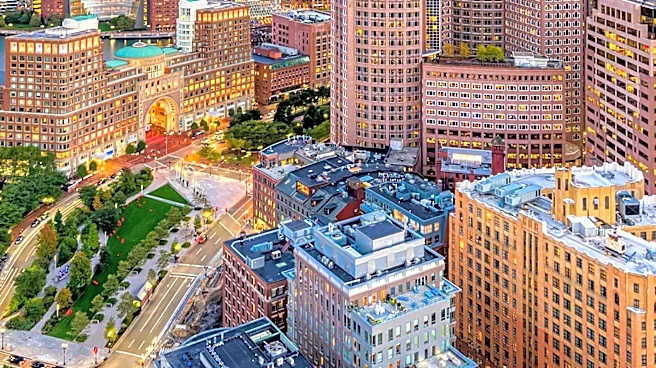
Boston is advancing a proposal for an 18-acre Exchange District in its Financial District, which could enable developers to access state and federal historic tax credits for office-to-residential conversions. The Massachusetts Historical Commission has
voted to send the proposed district to the National Park Service for final review and potential listing on the National Register of Historic Places. If approved, qualifying rehabilitation projects within this district, which spans streets like City Hall Avenue, Congress Street, and Milk Street, could become eligible for these tax credits. The Downtown Boston Alliance highlights that this designation could help transform underutilized office buildings into housing units. However, inclusion in the district does not automatically guarantee tax credit awards, as projects must still meet specific historic eligibility requirements and be certified as historic structures by the National Park Service.
Why It's Important?
This initiative is significant for Boston's efforts to address its housing shortage and revitalize its downtown area, which has seen increased office vacancies due to remote work trends. By making historic tax credits more accessible, the city aims to incentivize developers to convert commercial spaces into residential units, thereby increasing housing supply and potentially fostering more vibrant urban environments. The availability of these credits can significantly reduce the financial burden on developers, making complex adaptive reuse projects more economically viable. This move could also set a precedent for other U.S. cities facing similar challenges, demonstrating a strategic approach to repurpose existing infrastructure while preserving historical character. However, the competitive nature and specific qualification criteria for these credits mean that not all projects will benefit, and developers will still need to navigate a complex application process.
What's Next?
The proposed Exchange District will undergo final review by the National Park Service. If listed on the National Register of Historic Places, developers within the district will be able to apply for state and federal historic tax credits for qualifying office-to-residential conversion projects. The success of this initiative will depend on the number of projects that successfully secure these credits and the subsequent increase in housing units. City officials and developers will be closely monitoring the impact of this designation on Boston's stalled conversion pipeline, hoping it will accelerate the transformation of vacant office spaces into much-needed residential housing. The process for individual projects to secure credits will still require coordination among architects, developers, consultants, and government agencies.
Beyond the Headlines
Beyond the immediate economic and housing benefits, this proposal touches upon broader themes of urban planning, historical preservation, and sustainable development. By encouraging the adaptive reuse of existing buildings, Boston is promoting a more sustainable approach to growth, reducing the environmental impact associated with new construction. It also highlights the evolving role of historic districts, not just as repositories of the past, but as dynamic tools for future urban development. The challenge lies in balancing the preservation of historical integrity with the demands of modern residential living, ensuring that conversions respect the original character of the buildings while meeting contemporary safety and accessibility standards. This initiative could also spark discussions about the long-term viability of traditional office spaces and the need for flexible urban policies that can adapt to changing economic and social landscapes.