









What's Happening?
Actor Cameron Mathison recently shared his experiences with significant personal challenges, including the end of his 22-year marriage and the loss of his home in a fire. During an appearance on the 'Ay Por Favor' podcast with Richard Marx and Daisy Fuentes,
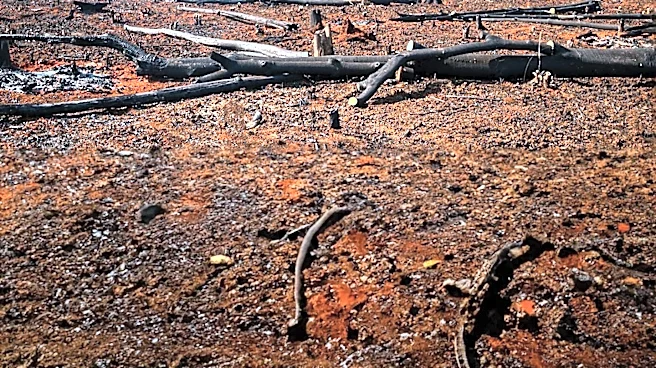
Mathison detailed how he has maintained a positive outlook despite these setbacks. He emphasized that placing happiness in external conditions, such as possessions or relationships, can lead to disappointment because life inevitably involves loss and change. Mathison recounted the emotional impact of losing his home, describing it as a member of his family and noting that all his and his children's belongings were destroyed. He described the moment he realized his home was gone after being evacuated during the fires, highlighting the profound sense of loss.
Why It's Important?
Mathison's public discussion of his personal struggles offers a relatable narrative for many Americans facing similar life-altering events. His perspective on finding happiness internally, rather than relying on external circumstances, resonates in a society often focused on material possessions and societal expectations. The experience of losing a home to natural disaster, as Mathison did, is a reality for an increasing number of individuals in the U.S., underscoring the emotional and practical devastation such events can cause. His story highlights the resilience required to rebuild one's life after significant loss, providing a message of hope and a framework for coping with adversity that can be valuable to a broad audience.
Beyond the Headlines
The narrative shared by Cameron Mathison extends beyond a celebrity's personal woes, touching upon universal themes of resilience, attachment to material possessions, and the search for inner peace. His reflection on the impermanence of external conditions and the importance of internal happiness offers a philosophical perspective on coping with life's inevitable challenges. This discussion can prompt broader conversations about mental health, the psychological impact of loss, and the strategies individuals employ to navigate trauma. It also subtly underscores the increasing vulnerability of communities to natural disasters, making personal stories like Mathison's a poignant reminder of the human cost of such events and the long road to recovery.