





What's Happening?
Lux Capital, a venture capital and private equity firm, has provided significant backing to Varda Space Industries. Varda, founded in January 2021 by Will Bruey and Delian Asparouhov, is focused on accelerating the development of commercial space infrastructure.
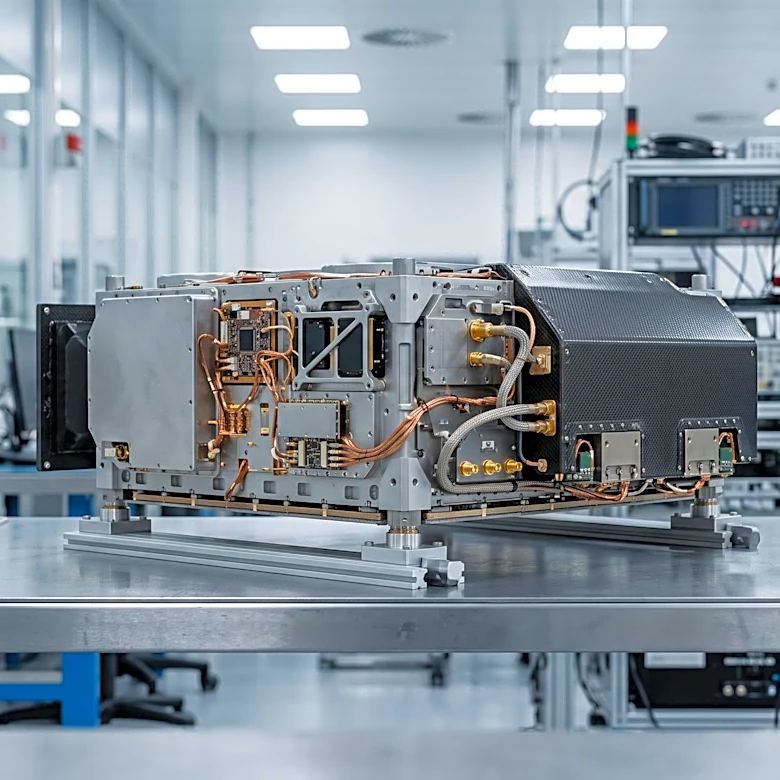
This includes in-orbit pharmaceutical processing and the creation of reliable and economical reentry capsules. Varda's W-Series vehicles are designed, built, and operated in-house, encompassing pharmaceutical processing payloads, capsules, C-PICA heat shields, and satellite buses. The company aims to enable the manufacturing of products in space that can only be produced in that environment, such as life-saving pharmaceuticals and advanced fiber optics. Varda Space Industries is headquartered in El Segundo, California, with additional offices in Washington, D.C., and Huntsville, Alabama.
Why It's Important?
This investment by Lux Capital underscores a growing trend in venture capital towards the burgeoning space economy. The development of commercial space infrastructure by companies like Varda Space Industries has significant implications for U.S. industries, particularly in pharmaceuticals and advanced materials. By enabling in-space manufacturing, Varda could unlock new production methods for high-value goods, potentially leading to breakthroughs in medicine and technology that are not feasible on Earth. This could create new markets, generate economic growth, and establish the U.S. as a leader in orbital manufacturing. The involvement of a prominent venture capital firm like Lux Capital signals confidence in the long-term viability and profitability of these innovative space ventures, attracting further investment and talent to the sector.
What's Next?
Varda Space Industries is expected to continue its work on developing and deploying its W-Series vehicles, with a focus on expanding its in-orbit manufacturing capabilities. The company's mission to create both products and infrastructure for the orbital economy suggests a future where space-based production becomes a more integrated part of global supply chains. Further advancements in reentry capsule technology will be crucial for safely returning these space-manufactured goods to Earth. The success of Varda's initiatives could pave the way for other companies to explore and invest in similar space-based industrial applications, potentially leading to a more robust and diverse U.S. space economy. The continued backing from investors like Lux Capital will be vital for funding these ambitious projects and bringing them to fruition.
Beyond the Headlines
The investment in Varda Space Industries highlights a broader shift towards viewing space not just as a frontier for exploration, but as a viable domain for industrial production and economic activity. This development raises questions about the regulatory frameworks needed to govern in-space manufacturing, intellectual property rights for space-produced goods, and the environmental impact of increased orbital operations. The ethical implications of manufacturing pharmaceuticals in space, potentially making them more accessible or effective, also warrant consideration. Ultimately, the success of companies like Varda could redefine the boundaries of manufacturing and innovation, pushing the U.S. to adapt its policies and infrastructure to support a truly orbital economy.