





What's Happening?
Epsilon Advanced Materials, an India-based graphite manufacturer, has tentatively pushed back the groundbreaking for its proposed 1.5-million-square-foot facility in Brunswick County’s Mid-Atlantic Industrial Rail Park to early 2028. The project, initially
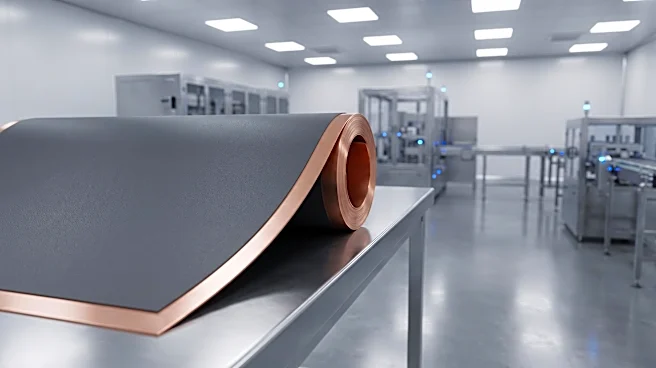
announced in 2023 as a $650 million investment expected to create 500 jobs, was first slated to break ground in early 2026. However, company officials indicated in January that additional 'regulatory clarity' was required before finalizing the project's timeline. According to Bill Early, executive director of Brunswick Business & Industry Development, Epsilon is currently undergoing a multi-year qualification process for the new plant, which is a requirement from its customers. The graphite produced at this facility is intended for use in lithium-ion batteries for electric vehicles, and the company also sees potential in serving the growing data storage sector. Epsilon is eligible for up to $3.4 million in state Job Development Investment Grant (JDIG) funding over 12 years, with its first grant year in 2026 and the first annual report due next year. The company has until December 2028 to meet its job targets.
Why It's Important?
This delay in Epsilon Advanced Materials' Brunswick County project highlights the complexities and regulatory hurdles often faced by large-scale industrial investments in the U.S. The facility is crucial for the domestic supply chain of lithium-ion batteries, particularly for electric vehicles, and its postponement could impact the broader U.S. efforts to localize critical material production. The 500 anticipated jobs and the $650 million investment represent a significant economic boost for Brunswick County, and any prolonged delay could affect local employment opportunities and economic development plans. Furthermore, the project's focus on graphite for EV batteries and data storage aligns with national strategic priorities in clean energy and technology infrastructure. The need for 'regulatory clarity' underscores the importance of streamlined and predictable permitting processes for attracting and retaining major industrial projects, especially those vital for emerging technologies. The state's Job Development Investment Grant is contingent on job creation, meaning the delay also impacts the timeline for the state to realize its return on investment in terms of employment.
What's Next?
Epsilon Advanced Materials will continue its multi-year qualification process, which is a prerequisite from its customers, before a firm construction start timeline can be established. The company's first annual report for its Job Development Investment Grant (JDIG) is due next year, and it has until December 2028 to meet its job creation targets. Local officials, such as Bill Early, will likely continue to work with Epsilon to navigate the regulatory landscape and facilitate the project's progression. The outcome of the qualification process and the attainment of regulatory clarity will be critical in determining the definitive groundbreaking date. Stakeholders in the electric vehicle and data storage sectors will be closely watching the development of this facility, as it represents a key component in their supply chains. The state Department of Commerce will also monitor the project's progress to ensure compliance with the JDIG terms.
Beyond the Headlines
The delay in Epsilon's project points to a broader challenge in the U.S. — balancing rapid industrial development, particularly in critical sectors like EV battery components, with environmental and regulatory oversight. The 'regulatory clarity' sought by Epsilon could involve various aspects, including environmental impact assessments, zoning, and compliance with local, state, and federal regulations. This situation underscores the tension between the urgency of establishing domestic supply chains for strategic materials and the need for thorough due diligence and community engagement. The project's eventual success or failure could influence future foreign direct investment decisions in the U.S., particularly for companies in advanced manufacturing and clean energy. It also highlights the importance of proactive policy-making to create a predictable and efficient regulatory environment that supports economic growth without compromising environmental and social standards. The long-term implications extend to national security and economic resilience, as the U.S. seeks to reduce reliance on foreign sources for critical materials.