







What's Happening?
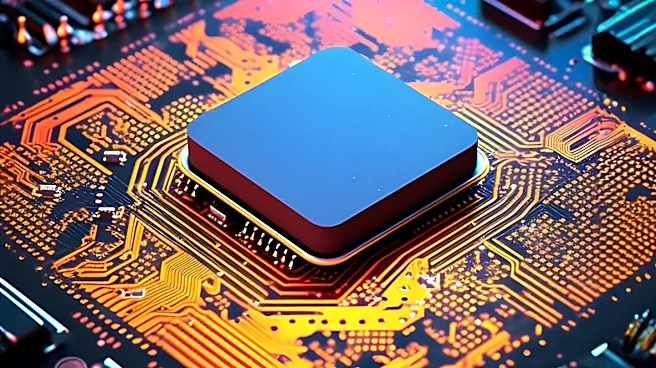
Alphabet, the parent company of Google, is reportedly developing a new server chip, internally named 'Frozen v2', designed to improve the efficiency of its Gemini AI models. This development aims to address a significant internal compute shortage that
has affected Google's ability to meet enterprise compute commitments. The new chip is expected to embed parts of Gemini's architecture directly into the silicon, potentially serving six to ten times more tokens per unit of power than Google's current AI chips, known as TPUs. This initiative is part of Alphabet's broader strategy to optimize hardware and software integration for real-world workloads. The announcement has positively impacted Alphabet's stock, which saw a 1.51% increase following the news.
Why It's Important?
The development of the Frozen v2 chip is significant as it represents Alphabet's strategic move to enhance its AI capabilities and maintain competitiveness in the AI hardware market, particularly against major players like AMD and Nvidia. By improving the efficiency of its AI models, Alphabet can better meet the growing demand for AI-driven solutions, potentially leading to increased market share and revenue. This move also underscores the importance of hardware-software integration in achieving optimal performance and efficiency in AI applications. The success of this chip could set a precedent for future innovations in AI hardware, influencing industry standards and practices.
What's Next?
Alphabet plans to target 2028 for the deployment of the Frozen v2 chip. The company is likely to continue its investment in AI research and development, focusing on enhancing the performance and efficiency of its AI models. As the chip is still in the development phase, Alphabet may conduct further testing and optimization to ensure its effectiveness. The company may also explore partnerships or collaborations to expand its AI capabilities and market reach. Stakeholders, including investors and industry analysts, will be closely monitoring Alphabet's progress and any updates regarding the chip's development and deployment.