







What's Happening?
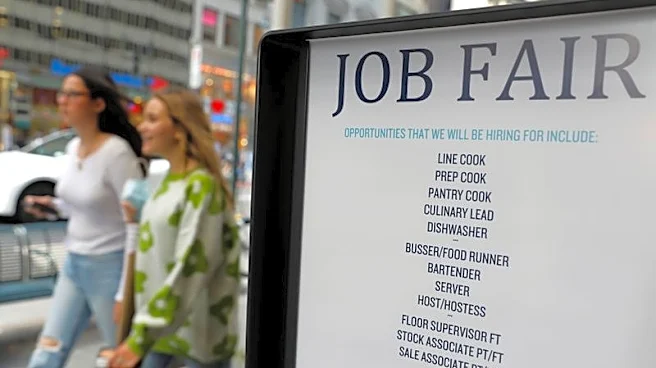
The U.S. unemployment rate fell slightly in June, dropping from 4.3% to 4.2%, according to the latest jobs report. However, this decrease is largely attributed to a significant reduction in the workforce, with approximately 720,000 individuals ceasing
to look for work. This decline in workforce participation has resulted in a generational low labor force participation rate of 61.5%, the lowest since March 2021, excluding the COVID-19 pandemic period. The Bureau of Labor Statistics reported a modest addition of 57,000 nonfarm payroll jobs, falling short of economists' expectations of 110,000 to 115,000. The employment-to-population ratio also decreased to 59.0%. Analysts suggest that changes in immigration policy and early retirements due to economic uncertainty are contributing factors to the shrinking workforce. Additionally, high inflation, exacerbated by geopolitical tensions, is impacting the cost of living.
Why It's Important?
The current labor market conditions present a challenging scenario for the Federal Reserve, which is tasked with balancing price stability and maximum employment. The dual mandate is complicated by elevated inflation and a deteriorating employment situation that is not fully captured by the headline unemployment rate. The significant reduction in the workforce and the low payroll growth suggest potential arguments for rate cuts. However, persistent inflation poses a risk that such cuts could exacerbate inflationary pressures. The situation also has implications for financial markets, as expectations of rate cuts could weaken the dollar and drive investors towards riskier assets, including cryptocurrencies. This environment could lead to increased volatility in financial markets as stakeholders adjust to the evolving economic landscape.
What's Next?
The Federal Reserve will need to carefully consider its next steps in response to the current economic data. Potential rate cuts could be on the table if the labor market continues to show signs of weakness, but the risk of fueling inflation remains a significant concern. Market participants will be closely watching the Fed's decisions and any signals regarding future monetary policy. Additionally, the ongoing geopolitical tensions and their impact on inflation will likely continue to influence the Fed's strategy. Stakeholders, including businesses and investors, will need to navigate this uncertain environment, potentially adjusting their strategies in anticipation of changes in monetary policy.