





What's Happening?
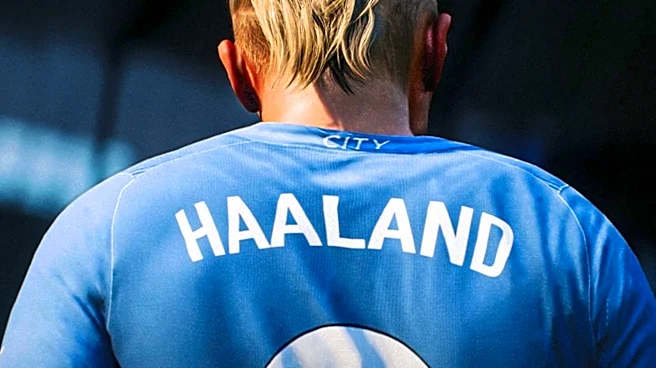
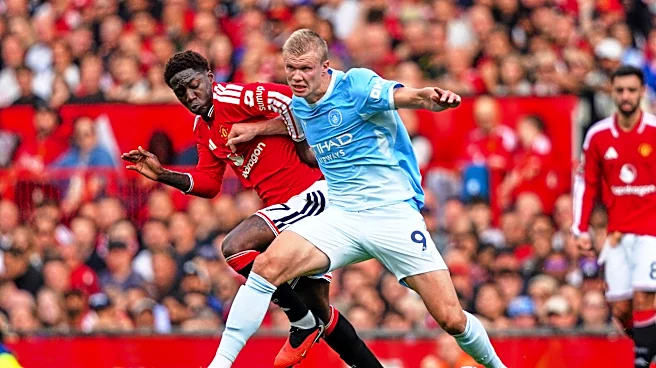
Erling Haaland, the Manchester City footballer, has become a prominent example of the privatization of soft power. Despite not being a diplomat or directly affiliated with the Norwegian government, his global influence and visibility are immense, largely
driven by football clubs, multinational corporations, digital platforms, and his personal brand. Millions worldwide watch him play, his goals are widely shared on social media, and his image appears in advertisements and global news. This phenomenon illustrates a significant shift in how soft power is generated, moving away from state-centric public diplomacy to a model where private actors, such as elite athletes, entertainers, and social media influencers, play a crucial role in shaping national images and international attraction. His case demonstrates that while traditional public diplomacy remains important, governments are increasingly becoming participants in a broader system of influence rather than sole authors of their national image.
Why It's Important?
This shift in soft power generation has profound implications for how nations project their image and influence on the global stage. Governments traditionally relied on public diplomacy through cultural exchanges, educational programs, and state-led initiatives to foster international admiration. However, the digital age has fragmented information flows and elevated the reach of private entities. Haaland's ability to command global attention, often surpassing that of Norwegian politicians or institutions, signifies that credibility and attraction are increasingly rooted in individual performance and commercial ventures rather than political involvement. This means that while a country might benefit from the international appeal of its private citizens, it also faces challenges in controlling narratives and managing potential misalignments between private actions and national interests. The commercial incentives driving this private soft power can occasionally align with diplomatic goals, but this alignment is not guaranteed, making it a less stable and direct form of influence for states.
What's Next?
Governments will need to continue adapting their public diplomacy strategies to engage with, rather than solely control, the diverse private actors who now shape global perceptions. This involves recognizing that they are no longer the exclusive producers of soft power and instead becoming participants in a broader system of influence. The challenge for public diplomacy will be to understand, respond to, and, where appropriate, collaborate with influential private actors whose global reach often exceeds that of official institutions. This adaptation could involve creating conditions that enable private actors to strengthen a country's international visibility, as seen with South Korea's K-pop and American Hollywood. However, governments must also contend with the inherent unpredictability and lack of direct control over these independent private actors, whose values, statements, or commercial relationships might not always align with national interests.
Beyond the Headlines
The rise of private actors in generating soft power raises ethical and strategic questions about national representation and influence. While athletes like Haaland can foster positive international perceptions, their independence means governments cannot fully control the message or mitigate risks associated with personal controversies or political statements. This asymmetry means states can benefit from private influence without possessing the authority to manage the associated risks. Furthermore, the commercialization of soft power means that global visibility is often driven by profitability rather than diplomatic interests, creating a potential disconnect between national goals and the motivations of private entities. This necessitates a re-evaluation of how national identity is constructed and projected in an increasingly decentralized and commercially driven global landscape, where authenticity and credibility are often derived from individual performance rather than state-sponsored narratives.