






What's Happening?
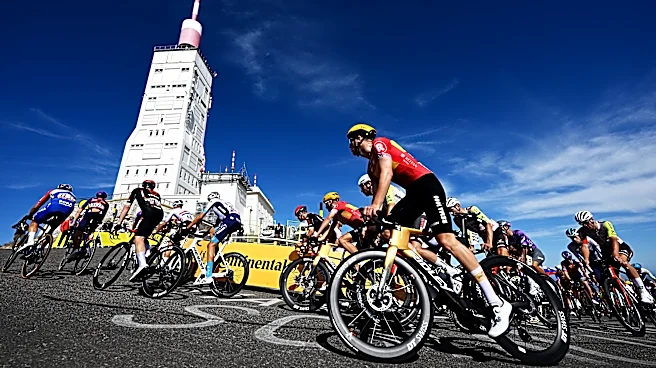
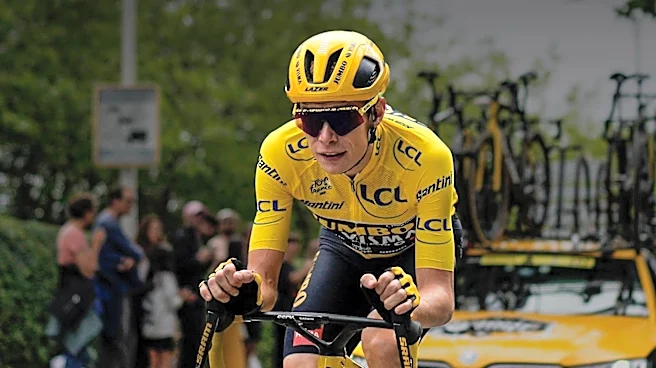
Tadej Pogacar, a four-time and defending champion, has taken the lead in the Tour de France after winning the third stage of the race. The stage, a 195.9-kilometer trek from Granollers, Spain, to Les Angles, France, saw Pogacar don the leader's yellow
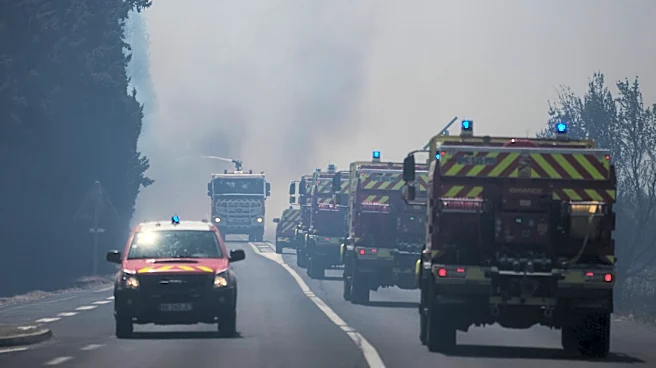
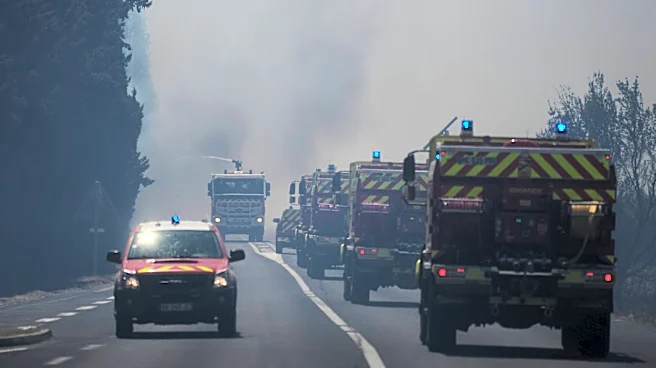
jersey, overtaking Denmark's Jonas Vingegaard. Despite being level on time, Pogacar's superior stage placings have given him the edge. The race is being conducted under challenging conditions, with wildfires in the region prompting organizers to request fans to stay away. The next stage will be a hilly journey from Carcassone to Foix.
Why It's Important?
Pogacar's lead in the Tour de France highlights his continued dominance in the sport, reinforcing his status as a top competitor. The event also underscores the impact of climate-related challenges on international sporting events, as wildfires and extreme heat affect both participants and spectators. The situation raises questions about the future of outdoor sports in the face of climate change and the need for adaptive strategies to ensure the safety and success of such events. The Tour de France remains a significant event in the cycling world, drawing attention to the sport and its athletes.
What's Next?
As the Tour de France progresses, Pogacar will aim to maintain his lead amidst fierce competition from rivals like Vingegaard and others. The ongoing wildfires may continue to affect the race, potentially leading to further restrictions on spectators and changes to the race route. Organizers will need to monitor the situation closely to ensure the safety of all involved. The outcome of the race could influence future strategies for managing large-scale sporting events in regions prone to climate-related disruptions.