






What's Happening?
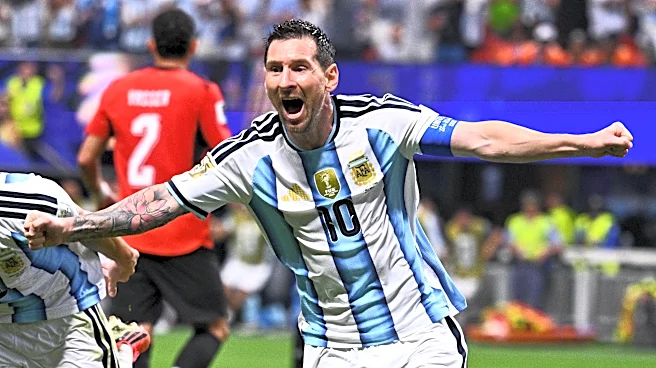
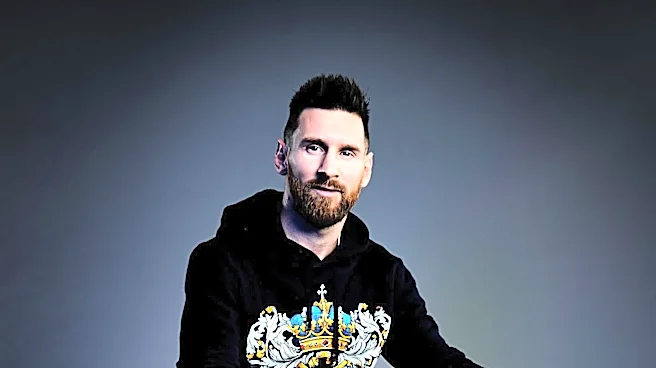
Lionel Messi, the renowned Argentine soccer player, has a history of interactions with Jewish and Israeli communities, which has occasionally placed him in the spotlight of geopolitical discussions. Throughout his career, Messi has supported Jewish causes
and Israeli companies, such as when he visited the Western Wall in Jerusalem in 2013 and participated in peace initiatives. His involvement in matches in Israel, including a 2019 friendly against Uruguay in Tel Aviv, has drawn both support and criticism, particularly from the Boycott, Divestment, Sanctions (BDS) movement. Despite protests, Messi played and scored in front of a large crowd, including Israeli President Reuven Rivlin. His actions have been interpreted differently by various groups, with some viewing them as supportive of Israel, while others see them as neutral or apolitical.
Why It's Important?
Messi's interactions with Jewish and Israeli communities highlight the complex intersection of sports, politics, and international relations. His actions have implications for how athletes are perceived in geopolitical contexts, especially in regions with longstanding conflicts. For Israel, Messi's participation in events there can be seen as a form of soft diplomacy, enhancing cultural and social ties. Conversely, for critics, particularly those aligned with the BDS movement, his involvement is seen as controversial. This situation underscores the broader role of sports figures in global political discourse and the potential for their actions to influence public opinion and diplomatic relations.