






What's Happening?
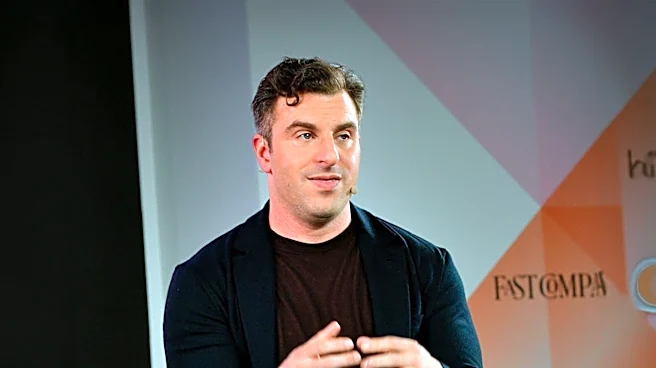
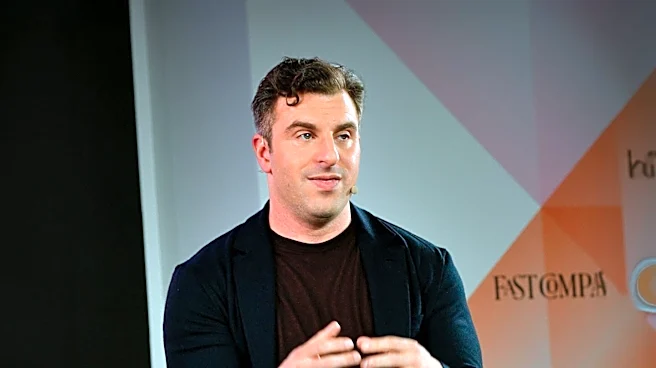
Brian Chesky, co-founder and CEO of Airbnb, employed a hands-on approach in the company's early stages to address critical business challenges. Faced with low booking rates, Chesky and his co-founder personally visited hosts in New York. During these
visits, they rented a camera and took high-quality listing photos themselves, recognizing that poor imagery was significantly hindering bookings. This direct engagement with hosts was not merely about fixing immediate problems but was a deliberate strategy to gain deep insights into what hosts and guests truly valued. This manual effort, though painstaking, provided invaluable learning that informed Airbnb's product development and overall strategy, demonstrating the principle of performing tasks manually until the process becomes painful, then automating it.
Why It's Important?
This early strategy by Brian Chesky highlights a crucial lesson for startups and established businesses alike: the importance of direct customer engagement in product development. By personally interacting with hosts and addressing their pain points, Airbnb was able to identify core issues that data alone might not have revealed. This approach allowed them to build a product that genuinely met user needs, fostering trust and improving the user experience. For the U.S. business landscape, this case exemplifies how founder-led, boots-on-the-ground research can be more effective than purely theoretical market analysis, leading to more robust and user-centric solutions. It underscores the value of qualitative insights in a data-driven world, influencing how companies might approach market research and product iteration.
What's Next?
The principle demonstrated by Chesky—to 'do things by hand until it is painful, then automate'—continues to be a relevant guideline for businesses scaling operations. Companies, particularly in the tech sector, are likely to continue adopting hybrid approaches that combine data analytics with direct user feedback to refine their offerings. This strategy suggests a future where initial manual, high-touch customer interactions are seen as essential for gathering authentic insights before transitioning to scalable, automated solutions. This could lead to more agile development cycles and products that are better aligned with user expectations, potentially influencing best practices in customer relationship management and product lifecycle development across various industries.
Beyond the Headlines
Chesky's method reveals a deeper philosophical approach to entrepreneurship: the idea that true innovation often stems from understanding the human element behind the data. This goes beyond mere customer service; it's about empathy-driven design and problem-solving. In an era increasingly dominated by AI and automation, this story serves as a reminder that some of the most critical insights still come from direct human interaction and observation. It challenges the notion that all problems can be solved through algorithms alone, suggesting that a blend of human intuition and technological efficiency is optimal. This approach could foster a culture of deeper engagement and understanding within companies, leading to more resilient and user-loved products in the long run.