




What's Happening?
Paul Singer's Elliott Investment Management and Paul Tudor Jones's Tudor Investment have significantly increased their put options on the Nasdaq-100, covering over $10 billion in shares. Filings made on November 16, covering holdings as of September 30,
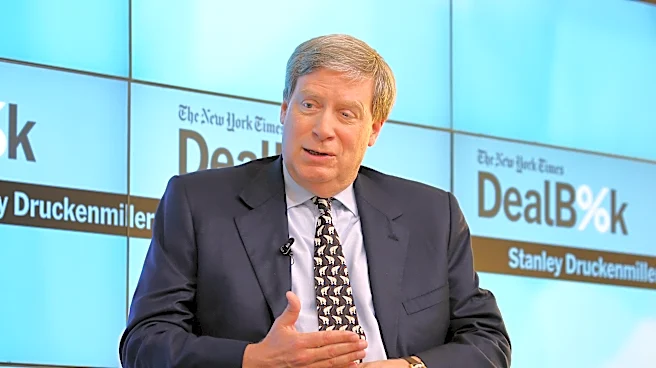
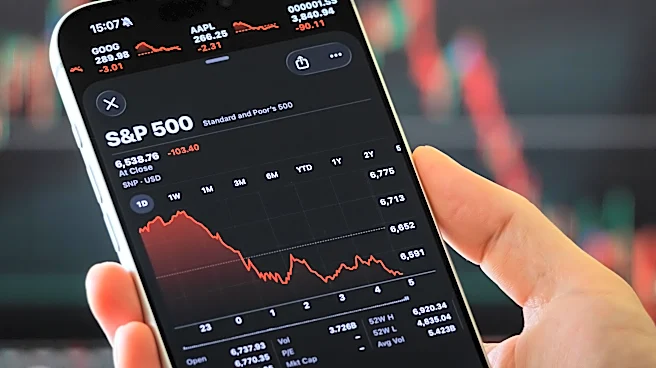
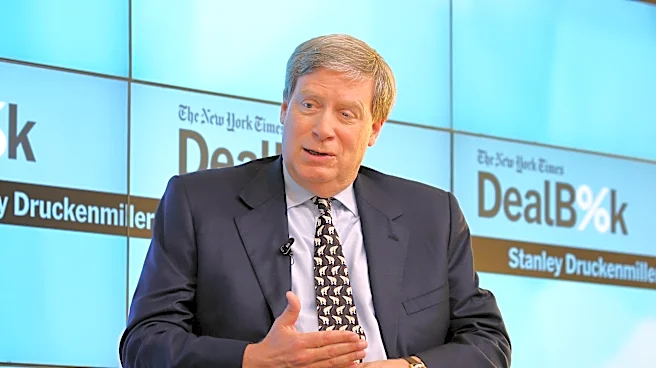
show Elliott increased its Nasdaq-100 puts by 57% and more than tripled its semiconductor puts. Tudor Investment also moved from a balanced position to a net bearish one, increasing its QQQ puts. These moves occurred before a market selloff in November, where the Nasdaq-100 fell into a correction and was briefly more than 20% below its peak. However, the reported figures represent the value of shares covered, not the actual money at risk, and Tudor also held substantial call options, complicating the interpretation of their net bearish stance. Stanley Druckenmiller, another prominent investor, is reported to be close to neutral on stocks and not betting against technology.
Why It's Important?
The actions of major hedge funds like Elliott and Tudor Investment are closely watched by investors as they can signal shifts in market sentiment and potential future trends. While the headline figures of $10 billion in Nasdaq-100 puts appear substantial, the 'notional illusion' of 13F filings means the actual capital at risk is likely much smaller. These filings do not disclose strike prices, expiry dates, or the cost of the options, making it difficult to ascertain the true extent of the bearish bets. The fact that these firms, with long records of market insight, chose to increase protection against technology stocks before a significant market downturn suggests a cautious outlook among some institutional investors regarding the tech sector's stability. This could influence other investors to re-evaluate their own portfolios, particularly their concentration in technology shares.
What's Next?
The true impact and profitability of these put positions will become clearer with future market movements and subsequent filings. The current data is eight weeks old, and both firms are known for frequent trading, so their current positions may have changed. The next 13F filings, due in mid-February 2027, will reveal their holdings as of December 31, providing an updated picture of whether these protective measures were maintained or cashed in. Investors will be monitoring indicators such as the cost of index options, the performance gap between large and small-cap companies, and whether selling pressure extends beyond companies heavily exposed to artificial intelligence. For individual investors, the key takeaway is to assess their own portfolio's concentration in technology stocks and consider their strategy in light of potential market volatility.
Beyond the Headlines
The reporting of these large put positions highlights a critical aspect of financial market transparency and the limitations of publicly available data. The 'notional illusion' inherent in 13F filings underscores that headline figures can be misleading without a deeper understanding of options strategies. Holding both puts and calls, as Tudor Investment did, can be a strategy to profit from large moves in either direction or to structure a spread, rather than a straightforward forecast of decline. This complexity emphasizes that interpreting institutional investor actions requires careful analysis beyond simple reported values. It also points to the broader trend of sophisticated hedging strategies employed by large funds to manage risk across diverse portfolios, often as insurance against general market downturns rather than specific bearish bets on a single sector.